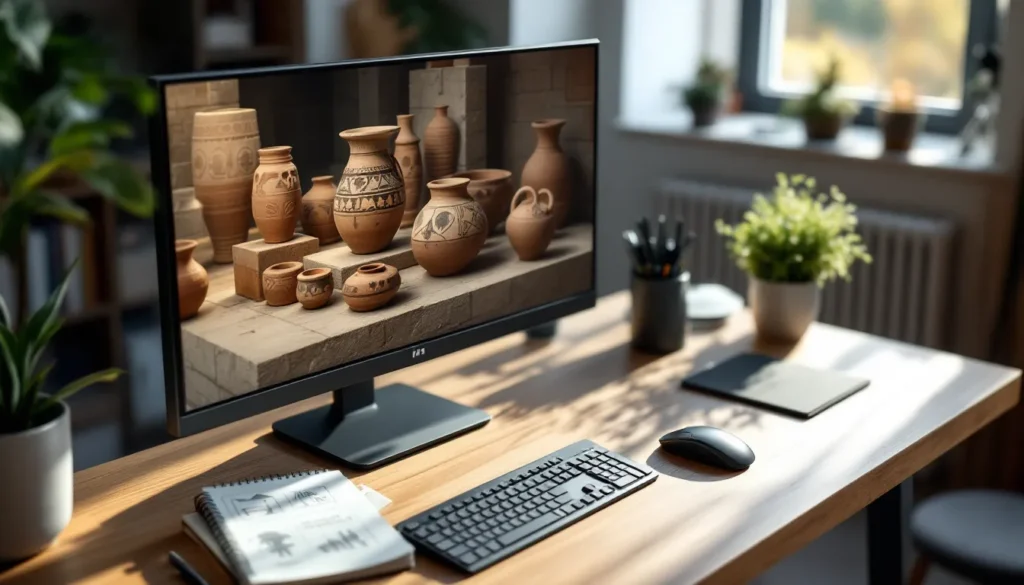
Decorated pots arrived in Minecraft with the 1.20 update, and they’ve quickly become one of the most interesting decorative and functional blocks in the game. Unlike most craftable items that follow predictable recipes, decorated pots let players create thousands of unique combinations by swapping out pottery sherds, making every pot potentially one-of-a-kind.
But they’re not just eye candy. Decorated pots function as storage containers, break in specific ways that return their materials, and tie directly into Minecraft’s archaeology system introduced with Trail Ruins and suspicious sand/gravel. Whether you’re building a museum, designing custom interiors, or hunting for rare sherds across biomes, understanding how decorated pots work gives you a creative edge.
This guide covers everything: how to craft them, where to find all 20 pottery sherd types, how the four-sided design system works, storage mechanics, and advanced building applications. Let’s dig in.
Table of Contents
ToggleKey Takeaways
- Decorated pots in Minecraft offer over 175,000 design combinations using 20 pottery sherd types and bricks, making each pot a unique decorative piece.
- Pottery sherds are obtained exclusively by brushing suspicious sand or gravel in Trail Ruins, desert temples, and ocean ruins, with Trail Ruins providing the richest concentration of 16+ sherd types.
- Decorated pots function as single-stack storage containers compatible with hoppers and comparators, enabling both decorative and redstone-based storage applications.
- Unlike most blocks, decorated pots cannot be rotated after placement and break instantly with any tool or by hand, dropping all four crafting materials rather than the pot itself.
- Explosions completely destroy decorated pots without dropping any items or materials, so protect valuable pots away from TNT, creepers, and other hazards.
- The four-sided design system directly corresponds to crafting table slots, allowing builders to control which sides display patterns by strategically mixing rare sherds with blank bricks.
What Is a Decorated Pot in Minecraft?
A decorated pot is a decorative block introduced in Minecraft Java Edition 1.20 and Bedrock Edition 1.20.0. It’s crafted using either bricks or pottery sherds, and each of the four materials used determines the design on one side of the pot.
What makes decorated pots unique:
- Customizable designs: Each side of the pot displays the pattern of the material used in that crafting slot.
- Storage capacity: Holds up to one stack of items (64 for most items, 16 for ender pearls, etc.).
- Breakable without tools: Breaking a decorated pot with any tool or by hand drops the four materials used to craft it, not the pot itself.
- Hopper compatible: Items can be inserted or extracted using hoppers.
- No blast resistance: Explosions destroy decorated pots completely without dropping materials.
Decorated pots generate naturally in Trail Ruins structures, usually containing items like emeralds, wheat, or bricks. They’re also the primary reason to engage with Minecraft’s archaeology system, pottery sherds are found exclusively through brushing suspicious sand or gravel blocks.
How to Craft a Decorated Pot
Finding and Collecting Pottery Sherds
Pottery sherds are items obtained by brushing suspicious sand or suspicious gravel with a brush. They cannot be crafted and only generate in specific structures.
Suspicious blocks spawn in:
- Desert Temples (suspicious sand)
- Desert Wells (suspicious sand)
- Warm Ocean Ruins (suspicious sand)
- Cold Ocean Ruins (suspicious gravel)
- Trail Ruins (suspicious gravel)
To collect sherds:
- Craft a brush using 1 feather, 1 copper ingot, and 1 stick.
- Use the brush on suspicious sand or gravel blocks (right-click and hold).
- After about 10 seconds of brushing, the block drops a random item, potentially a pottery sherd.
Each structure has a specific loot table determining which sherds can appear. Some sherds like the Blade Pottery Sherd are exclusive to a single structure type, making them harder to collect.
Step-by-Step Crafting Recipe
Decorated pots are crafted using a crafting table (not a furnace or stonecutter). The recipe follows a diamond pattern:
- Place one material in the top-center slot.
- Place one material in the middle-left slot.
- Place one material in the middle-right slot.
- Place one material in the bottom-center slot.
The four corner slots remain empty. Each material you place determines the design on one side of the finished pot.
Result: 1 decorated pot with patterns corresponding to the materials used.
Using Bricks vs. Pottery Sherds
You can craft decorated pots using bricks (the item, not the block) or pottery sherds, or any combination of both.
Bricks:
- Easiest to obtain (smelt clay balls).
- Produce a blank side on the pot (no pattern).
- Useful for creating pots with one, two, or three patterned sides.
Pottery Sherds:
- Rare and structure-specific.
- Each sherd type displays a unique pattern (skull, blade, archer, etc.).
- Required for creating fully patterned or thematically consistent pots.
Mixing bricks and sherds lets you control exactly which sides display patterns. For example, using three bricks and one Angler Pottery Sherd creates a pot with one decorated side and three blank sides, perfect for positioning against a wall.
All Pottery Sherd Types and Where to Find Them
There are 20 pottery sherd types in Minecraft as of version 1.20.5. Each has a distinct pattern and spawns in specific structures. Many detailed walkthrough resources recommend prioritizing Trail Ruins for sherd hunting due to the higher concentration of suspicious gravel blocks.
Desert Pyramid and Desert Well Sherds
Desert Temples (suspicious sand in the lower chambers):
- Archer Pottery Sherd: Depicts a bow and arrow.
- Arms Up Pottery Sherd: Shows a figure with raised arms.
- Prize Pottery Sherd: Features a diamond shape.
- Skull Pottery Sherd: Displays a skull pattern.
Desert Wells (suspicious sand at the bottom):
- Brewer Pottery Sherd: Shows a brewing stand silhouette.
- Prize Pottery Sherd: Also available here.
Desert wells are less common than temples but easier to excavate due to their smaller size.
Ocean Ruins and Shipwreck Sherds
Warm Ocean Ruins (suspicious sand):
- Angler Pottery Sherd: Features a fishing rod.
- Shelter Pottery Sherd: Shows a house or structure.
- Snort Pottery Sherd: Depicts a sniffer mob.
- Sniffer Pottery Sherd: Another sniffer-themed design.
Shipwrecks do not contain pottery sherds, only ocean ruins have them. Cold and warm ocean ruins have different loot tables, so check the water temperature if you’re hunting specific sherds.
Trail Ruins Sherds
Trail Ruins are the richest source of pottery sherds, with 16 different types available. These structures generate in multiple biomes and contain large quantities of suspicious gravel.
Exclusive to Trail Ruins:
- Blade Pottery Sherd: Shows a sword blade.
- Danger Pottery Sherd: Features a creeper face.
- Explorer Pottery Sherd: Depicts a map.
- Friend Pottery Sherd: Shows two figures.
- Heart Pottery Sherd: Simple heart design.
- Heartbreak Pottery Sherd: Broken heart pattern.
- Howl Pottery Sherd: Wolf howling silhouette.
- Miner Pottery Sherd: Pickaxe design.
- Mourner Pottery Sherd: Somber figure.
- Plenty Pottery Sherd: Wheat or crops.
- Sheaf Pottery Sherd: Bundle of wheat.
Also available in Trail Ruins (shared with other structures):
- Burn Pottery Sherd
- Danger Pottery Sherd
- Friend Pottery Sherd
- Heart Pottery Sherd
- Heartbreak Pottery Sherd
Trail Ruins are the go-to farming location for completionists.
Cold Ocean Ruins Sherds
Cold Ocean Ruins (suspicious gravel, not sand):
- Blade Pottery Sherd: Also found in Trail Ruins.
- Explorer Pottery Sherd: Shared with Trail Ruins.
- Mourner Pottery Sherd: Available in both locations.
- Plenty Pottery Sherd: Overlaps with Trail Ruins.
Cold ocean ruins are distinguishable by their stone brick and prismarine construction, found in cold and frozen ocean biomes.
How to Customize Decorated Pot Designs
Creating Unique Pattern Combinations
With 20 pottery sherd types plus the option to use bricks, decorated pots offer over 175,000 possible design combinations (20^4 + variations with bricks). Here’s how to plan your designs:
Thematic pots:
- All four sides use sherds from the same visual theme (e.g., four combat-related sherds: Blade, Archer, Danger, Skull).
- Works well for museum displays or lore builds.
Asymmetric designs:
- Mix sherds and bricks to create pots with one or two focal sides.
- Position these against walls or in corners where only certain sides are visible.
Random archaeology finds:
- Use whatever sherds you’ve collected for an authentic “excavated artifact” aesthetic.
- Great for survival builds where sherd availability is limited.
Color coordination:
- While sherds themselves don’t change color, positioning pots near complementary blocks (terracotta, concrete, glazed terracotta) enhances visual cohesion.
Many builders create “sherd libraries” in creative mode to preview combinations before committing materials in survival.
Understanding the Four-Sided Design System
Each decorated pot has four sides, and the crafting table slots directly correspond to these sides:
- Top slot: Front side (facing you when placed).
- Left slot: Left side.
- Right slot: Right side.
- Bottom slot: Back side.
Important mechanics:
- Rotation matters: When placing a decorated pot, the front side faces toward you. Use F5 (third-person view) to check orientation before placement.
- No post-placement rotation: Unlike stairs or logs, you cannot rotate a decorated pot after placing it. Break and re-place if the orientation is wrong.
- Symmetry isn’t automatic: Using the same sherd in opposite slots (top and bottom, or left and right) doesn’t create mirrored symmetry, each side displays the exact same pattern in the same orientation.
For builds where all four sides are visible (centerpiece displays, pedestals), plan for 360-degree visual appeal. For wall-mounted or corner placements, only decorate the visible sides to conserve rare sherds.
Using Decorated Pots for Storage
How Decorated Pot Storage Works
Decorated pots function as storage containers with unique mechanics:
- Capacity: Stores exactly one stack (up to 64 items for most, or the max stack size for that item).
- No GUI: Right-clicking a decorated pot inserts the item stack you’re holding. There’s no inventory screen.
- Visual feedback: The pot wobbles slightly when items are inserted.
- Retrieval: Break the pot to retrieve stored items (they drop along with the crafting materials).
Storage limitations:
- You cannot partially remove items, breaking the pot drops everything.
- No sorting or multiple item types per pot.
- Comparators detect item count (useful for redstone contraptions).
Best use cases:
- Hidden storage in decorative builds.
- Single-item caches (one pot = one type of resource).
- Redstone-triggered systems that read item counts.
Accessing Items with Hoppers
Hoppers interact with decorated pots in both directions:
Inserting items:
- Place a hopper above or pointing into a decorated pot.
- The hopper transfers items until the pot is full (one stack).
- Useful for automated farms where you want decorative storage endpoints.
Extracting items:
- Place a hopper below a decorated pot.
- Items are extracted automatically when the pot contains them.
- Breaking the pot with a hopper underneath catches both items and materials.
Redstone applications:
- Attach a comparator to a decorated pot to read fullness (signal strength 0-15 based on stack size).
- Use in hidden door mechanisms, item-counting systems, or decorative vending machines.
- The pot’s aesthetic makes redstone contraptions look intentional rather than mechanical.
Note: Decorated pots do not work with droppers or dispensers, only hoppers.
Breaking Decorated Pots: What You Need to Know
Decorated pots have unusual breaking mechanics that differ from most Minecraft blocks:
Breaking by hand or tool:
- Instantly destroyed regardless of tool (even with efficiency enchantments, it makes no difference).
- Drops all four materials used in crafting (pottery sherds and/or bricks).
- Drops all stored items separately.
- The pot itself is not recoverable, you’ll need to re-craft it.
Breaking with Silk Touch:
- Silk Touch does not preserve decorated pots.
- Still drops the four crafting materials, not the pot block.
- This is intentional design, decorated pots are meant to be temporary or recraftable.
Explosion damage:
- TNT, creepers, and other explosions completely destroy decorated pots.
- No materials or items are dropped, everything is lost.
- Protect valuable decorated pots with blast-resistant blocks (obsidian, ancient debris) or keep mobs away.
Piston interactions:
- Decorated pots are not movable by pistons.
- Attempting to push one with a piston breaks the pot and drops materials.
- Use this mechanic intentionally in contraptions that need to “unpack” sherds.
Water and lava:
- Decorated pots are not waterlogged.
- Water or lava flowing into a pot’s space breaks it, dropping materials and items.
The breakability system rewards careful planning, don’t place decorated pots near hazards, and always keep spare sherds/bricks for re-crafting if accidents happen.
Creative Building Ideas with Decorated Pots
Decorative Display and Museum Builds
Decorated pots excel in museum and gallery builds where archaeology or history is the theme:
- Artifact halls: Line shelves with pots showing different sherds, each representing a “discovered relic.”
- Item frames combo: Place pots on pedestals (upside-down stairs, slabs, or blocks) with item frames showing the sherds used.
- Lighting integration: Surround pots with soul lanterns or candles for an ancient temple vibe.
- Lore storytelling: Arrange pots in sequence to “tell a story” using sherds (e.g., Miner → Explorer → Danger → Mourner).
Pot-heavy builds benefit from mixing in terracotta, mud bricks, and chiseled sandstone for textural variety. Some players reference community showcase builds for inspiration on large-scale museum layouts.
Ancient and Archaeological Themed Builds
Excavation sites:
- Scatter decorated pots among suspicious sand/gravel, brushes, and partially exposed structures.
- Use scaffolding, tents (banners and wool), and work tables (cartography tables, smithing tables) for a dig site aesthetic.
- Combine with fossils (bone blocks) and armor stands holding leather armor as “archaeologists.”
Desert and mesa temples:
- Incorporate pots into custom pyramid or mesa builds.
- Use Desert Pyramid sherds (Archer, Skull) for thematic consistency.
- Position pots in hidden chambers or as “trapped treasure” rooms.
Underwater ruins:
- Place pots in custom ocean ruin builds using prismarine and stone bricks.
- Pair with Angler and Shelter sherds for maritime themes.
- Add sea pickles and kelp for ambiance.
Custom Interior Design Applications
Decorated pots work surprisingly well in modern and rustic interiors:
Kitchen and pantry:
- Use pots as storage for single ingredient types (one pot = wheat, another = carrots).
- Place on counters (slabs, trapdoors) or in corner alcoves.
- Blank-sided pots (all bricks) provide a clean, terracotta-like look.
Libraries and studies:
- Pots on bookshelves or lectern stands add scholarly decoration.
- Use Miner, Explorer, or Plenty sherds for academic themes.
Bedrooms and lounges:
- Pots as decorative vases on end tables or windowsills.
- Combine with flowers (place flower pots next to decorated pots for layered decor).
- Heart and Friend sherds work well in cozy, personal spaces.
Redstone-hidden storage:
- Conceal decorated pots behind paintings or trapdoor walls.
- Use comparator output to trigger hidden doors when a pot is filled.
The pot’s compact size (slightly smaller than a full block) allows for tight spacing and layered designs that feel intentional rather than cluttered.
Advanced Tips and Tricks for Decorated Pots
Sherd farming efficiency:
- Prioritize Trail Ruins for bulk sherd collection, they’re the only structure with 16+ sherd types.
- Bring multiple brushes (they have 64 durability). Craft spares with Unbreaking III or Mending if possible (via villager trades).
- Use night vision potions when excavating ocean ruins, suspicious gravel is hard to spot underwater.
Duplication prevention:
- Decorated pots cannot be duplicated using TNT or other glitch methods as of patch 1.20.5.
- Always keep backup sherds in storage, losing a pot to an explosion means re-farming the sherds.
Multiplayer considerations:
- Decorated pots are fully breakable by other players on servers, protect valuable pots with land claims or restricted zones.
- Pot storage is visible to anyone who breaks it, so don’t store rare items in pots on public servers without protections.
- Consider “display-only” pots (no items stored) in community builds.
Texture pack compatibility:
- Custom resource packs and mods can alter pottery sherd patterns and pot appearances.
- Some texture packs add HD or themed variants (ancient Greek, Mesoamerican, etc.).
- Test packs in creative mode before applying to survival builds, some patterns may not match your intended aesthetic.
Speedrun and challenge uses:
- Decorated pots are not required for any advancements or progression.
- But, the Careful Restoration advancement (craft a decorated pot) is easy to obtain and worth pursuing for completionists.
- Pots can be used as early-game storage in niche challenge runs where chests are restricted.
Version differences:
- Bedrock Edition has identical decorated pot functionality to Java Edition as of 1.20.0.
- Older versions (pre-1.20) do not support decorated pots or pottery sherds, worlds must be updated to access this content.
Hopper filtering tricks:
- Use decorated pots in item sorting systems where you need single-stack buffers.
- Position pots between hopper lines to create intentional bottlenecks or item counters.
- Comparator output (0-15) provides finer control than chest-based systems for low-volume automation.
Conclusion
Decorated pots sit at the intersection of Minecraft’s archaeology system and creative building, they’re functional enough to matter in survival and flexible enough to inspire countless designs. With 20 pottery sherd types scattered across desert temples, ocean ruins, and trail ruins, collecting the full set gives you a reason to explore structures you might otherwise skip.
The four-sided design system rewards experimentation, whether you’re crafting thematic museum pieces or one-off decorative accents. Storage mechanics and hopper compatibility open redstone possibilities, while the breakability system keeps the stakes interesting, every pot placement feels intentional.
Start with Trail Ruins if you’re sherd hunting, mix bricks and sherds to conserve rare patterns, and don’t sleep on hoppers for hidden storage builds. Decorated pots won’t revolutionize your Minecraft experience, but they’ll add depth to it, literally and figuratively.