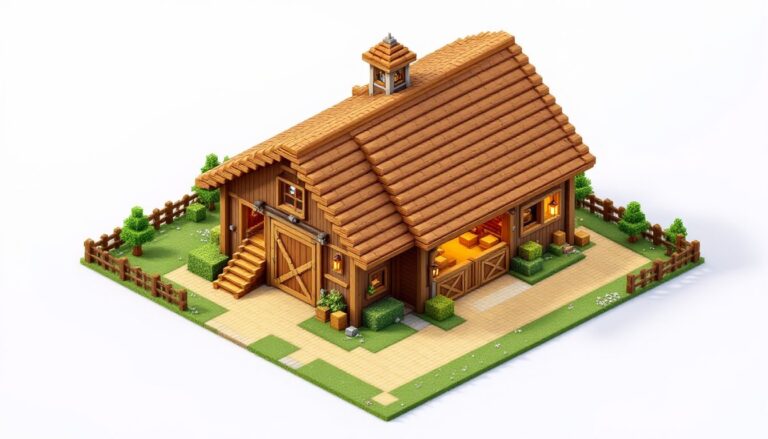
Floating thousands of blocks above the void with nothing but a tiny island and a tree, Skyblock has become one of Minecraft’s most enduring game modes. What started as a simple custom map in the early 2010s has evolved into a full-fledged multiplayer phenomenon, with dedicated servers offering economies, custom items, and communities numbering in the hundreds of thousands. In 2026, minecraft skyblock servers are more diverse and feature-rich than ever, blending survival mechanics with MMO-style progression systems that keep players grinding for months.
Whether you’re a veteran looking for a new home or a first-timer curious about the hype, finding the right server matters. Performance, community size, custom features, and economy balance can make or break your experience. This guide breaks down the top skyblock minecraft servers available right now, what makes each one worth your time, and how to dominate once you’ve chosen your island in the sky.
Table of Contents
ToggleKey Takeaways
- Minecraft skyblock servers transform the original survival challenge into multiplayer economies where resource generation, automation, and strategic trading are as important as building your island.
- Hypixel SkyBlock remains the most popular choice with 30,000-50,000 concurrent players, offering complex MMO features like skill trees, dungeons, and intricate economy systems for dedicated players.
- When choosing a skyblock server, prioritize checking server uptime (98%+ required), tick rate performance (19+ TPS), custom item balance, and community culture before committing hundreds of hours.
- Optimize your progression by building cobblestone generators first, expanding your island platform early, and learning your server’s economy patterns to flip items and craft for profit rather than pure grinding.
- Co-op islands accelerate progress through shared resources and specialized roles, while solo play offers complete control and self-sufficiency satisfaction for players who prefer independent achievement.
- Skyblock’s appeal stems from its perfect balance of simplicity (beginners grasp basics instantly) and depth (hundreds of hours to master), combined with regular seasonal content updates that keep experienced players engaged.
What Are Minecraft Skyblock Servers?
Skyblock servers take the core concept of the original Skyblock map, survive on a tiny floating island with limited resources, and transform it into a persistent multiplayer experience. Instead of a single-player challenge, these servers host hundreds or thousands of players simultaneously, each managing their own island while participating in a shared economy and community.
Unlike vanilla Minecraft survival, Skyblock servers strip away nearly everything. You start with a small island, maybe a chest with basic supplies, and a single tree. There’s no mining down to caves, no villages to raid, no endless forests to harvest. Every resource has to be generated, traded for, or earned through custom progression systems unique to each server.
How Skyblock Gameplay Works
The loop is deceptively simple: expand your island, automate resource generation, complete challenges, and climb progression tiers. Most servers use a leveling system where specific blocks placed on your island contribute to an “island level” score. Want to hit level 1,000? You’ll need farms producing thousands of melons, massive cobblestone generators, or rare custom blocks earned through quests.
Resource generation starts basic, cobblestone generators, tree farms, and simple crop plots, but scales into complex automation. Mid-game, players build farms for iron, gold, and mob drops. Late-game setups involve minion systems (automated workers that gather resources while you’re offline), custom spawners, and highly optimized layouts that maximize efficiency per block.
Trading and economy integration separate multiplayer Skyblock from the solo experience. Servers carry out auction houses, player shops, and global marketplaces where rare items, custom enchantments, and bulk resources change hands. Learning market trends and flipping items can net more resources than grinding, making economic strategy as important as building skill.
Why Skyblock Remains Popular in 2026
Skyblock’s staying power comes from its perfect balance of simplicity and depth. New players can grasp the basics in minutes, make cobblestone, expand your island, plant crops. But mastering the meta takes hundreds of hours. There’s always another milestone: the next island level threshold, a rare drop from a custom boss, or dominating the server economy leaderboards.
The format also benefits from constant server updates. Major minecraft skyblock server networks push seasonal content, new custom items, rebalanced economies, and fresh challenges multiple times per year. Hypixel’s SkyBlock, for example, has added entire new skill trees, dungeon systems, and endgame content since its 2019 launch, keeping the core playerbase engaged.
Community-driven competition fuels retention. Leaderboards for island levels, wealth, skill mastery, and collection completions turn the chill survival game into a grind-heavy MMO for those who want it. Co-op islands let friend groups tackle challenges together, while solo players can chase world records. The social aspect, guilds, trading communities, and collaborative projects, adds layers beyond the core gameplay loop.
Top Minecraft Skyblock Servers to Play Right Now
Dozens of skyblock servers compete for players in 2026, but a handful dominate the landscape. Each offers a distinct take on the formula, from hyper-complex MMO systems to streamlined classic experiences.
Hypixel SkyBlock: The Most Popular Choice
IP: mc.hypixel.net
Average Players: 30,000-50,000 concurrent
Hypixel SkyBlock isn’t just the most popular Minecraft skyblock server, it’s essentially its own game. Launched in 2019, it’s evolved into a feature-dense MMO with combat stats, skill trees, dungeons, custom bosses, pets, and hundreds of unique items. The learning curve is steep, but no other server offers this level of depth.
Progression revolves around Skills (Mining, Foraging, Combat, Farming, etc.) that unlock new abilities and crafting recipes. The Dungeon system adds instanced combat challenges with class roles (Tank, Healer, Mage, Berserker, Archer), rare loot drops, and difficulty tiers. Endgame players chase gear with specific stat rolls, optimize Talismans (passive buff items), and min-max builds for boss fights that require coordination.
The economy is equally complex. The Auction House sees billions of coins traded daily. Flipping items, crafting for profit, and manipulating bazaar prices (a stock market-style instant buy/sell system) can generate more wealth than traditional farming. Updates arrive regularly, the Crimson Isle expansion in 2024 added an entirely new area, and balance patches tweak the meta every few weeks.
Downsides? The complexity can overwhelm new players, and the grind to compete with veterans is measured in hundreds of hours. Server performance can dip during peak times, though Hypixel’s infrastructure is generally solid. Still, for players who want the deepest Skyblock experience, this is the gold standard.
ManaCube SkyBlock: Community-Driven Experience
IP: play.manacube.com
Average Players: 1,000-2,000 concurrent
ManaCube offers a more traditional Skyblock experience with a tight-knit community. The server emphasizes social interaction, player markets, and collaborative projects over hardcore grinding. Custom enchantments, purchasable island upgrades, and a cosmetic system provide progression without the overwhelming complexity of Hypixel.
The economy leans heavily on player interaction. There’s an auction house, but many experienced multiplayer enthusiasts prefer direct trades and player-run shops. Seasonal events and limited-time challenges keep the playerbase engaged without requiring constant meta-chasing.
ManaCube runs multiple game modes beyond Skyblock, so the community isn’t exclusively focused on one format. This can dilute the playerbase but also means cross-mode events and shared economies add variety. Performance is consistently strong with minimal lag, and the staff actively respond to community feedback.
Best for players who want Skyblock’s core loop without the MMO bloat, and who value community interaction over leaderboard competition.
PikaNetwork SkyBlock: Global Player Base
IP: play.pika-network.net
Average Players: 3,000-5,000 concurrent
PikaNetwork’s Skyblock servers attract an international audience with solid performance across regions. The server balances custom content with accessibility, there are unique items, custom enchantments, and island upgrades, but the learning curve remains manageable for newcomers.
Cracked client support sets PikaNetwork apart, allowing players without official Minecraft accounts to join. This expands the playerbase significantly, especially in regions where game purchases are less common. The trade-off is a younger average player age and occasionally less mature chat environments.
Progression uses a tiered island system where completing challenges unlocks new biomes, mob spawns, and crafting recipes. The economy stays relatively balanced thanks to active admin oversight and periodic resets for specific markets. PVP arenas and island raids add competitive elements for players bored with pure resource grinding.
Anti-cheat systems are robust, necessary given the open access policy. Server resets happen seasonally, wiping progress but offering fresh economies and new content updates. For players who enjoy the rush of fresh server starts and don’t mind periodic wipes, PikaNetwork delivers.
ExtremeCraft SkyBlock: Classic Gameplay
IP: play.extremecraft.net
Average Players: 500-1,000 concurrent
ExtremeCraft strips Skyblock back to its roots. No skill trees, no dungeon systems, no complex stat optimization, just you, your island, and the core challenge of resource generation and expansion. Custom items exist but remain limited compared to mega-servers.
The appeal is simplicity and stability. Many veteran players appreciate servers that don’t require studying wiki pages to understand basic mechanics, as noted in recent discussions on PC gaming communities. Island levels, basic challenges, and a straightforward economy let you focus on building and automating without meta anxiety.
Server performance is exceptional thanks to the lighter plugin load. Uptime consistently exceeds 99%, and lag is nearly nonexistent even during peak hours. The community skews older and more relaxed, with less emphasis on competition and more on collaborative projects.
ExtremeCraft doesn’t reset often, some islands have existed for years. This stability attracts players who want long-term projects without the fear of wipes. The downside is slower content updates and a smaller, less active playerbase. If you want Skyblock as it was meant to be, refined but not reinvented, this is your server.
Mineville SkyBlock: Crossplay Compatibility
IP: play.mineville.org (Java) | Bedrock compatible via port 19132
Average Players: 2,000-3,000 concurrent (combined Java and Bedrock)
Mineville’s standout feature is full crossplay between Java and Bedrock editions. Console players (Xbox, PlayStation, Switch) and mobile users play alongside PC gamers on the same islands, sharing the same economy and progression systems. This is rare in the Skyblock space and significantly expands the potential playerbase.
Gameplay sits between classic and modern, there are custom items, enchantments, and island upgrades, but not the overwhelming depth of Hypixel. The mobile-friendly interface ensures touchscreen players aren’t at a massive disadvantage, though PC players still dominate high-level competition.
Crossplay comes with trade-offs. Some Java-specific mechanics get simplified for Bedrock compatibility, and performance optimization for mobile devices means certain visual effects and particle systems are toned down. But for friend groups spanning multiple platforms, Mineville is essentially the only viable option.
The economy is active but smaller-scale than top Java-only servers. Updates arrive regularly, with seasonal events and new content drops every few months. Server stability is generally good, though Bedrock clients occasionally face connection issues during peak times.
Key Features to Look for in Skyblock Servers
Not all minecraft skyblock servers are created equal. Before committing hundreds of hours, evaluate these critical factors that separate great servers from mediocre ones.
Server Uptime and Performance
Nothing kills momentum like losing progress to crashes or rolling back hours of work. Check server uptime stats, reliable networks maintain 98%+ uptime. Ask existing players about lag during peak hours, especially if you play during high-traffic times.
Tick rate matters for automation. Servers running below 20 TPS (ticks per second) will slow your farms, minions, and generation systems. Most quality servers display current TPS via commands like /tps. Anything consistently below 19 TPS means performance issues will impact your progression.
Backup frequency protects against data loss. Servers should run automatic backups every 1-6 hours and restore quickly after crashes. Community forums or Discord servers usually reveal a network’s track record, search for “rollback” or “data loss” complaints.
Custom Items and Enchantments
Custom content adds depth but can overwhelm or feel pay-to-win if poorly balanced. Look for servers where custom items are earned through gameplay rather than exclusively purchased. The best implementations tie unique items to specific achievements, boss drops, or high-level crafting.
Enchantment systems should enhance vanilla mechanics without replacing them entirely. Avoid servers where starting progress requires custom enchants only available through donations. Balanced servers offer custom enchants as endgame optimization, not mandatory early progression.
Wiki documentation quality indicates how well custom systems are supported. Servers with detailed wikis, up-to-date guides, and active community resources make learning custom mechanics far less frustrating. If you can’t find clear info on how custom items work, expect a painful trial-and-error learning process.
Economy and Trading Systems
A healthy economy needs item sinks (ways to remove items/currency from circulation) and balanced generation rates. Servers without effective sinks suffer from inflation where rare items become worthless as supply floods the market. Look for servers with NPC shops, crafting costs, and periodic money sinks that maintain value.
Auction house interfaces vary wildly. The best systems include search filters, price history graphs, and bid/buyout options. Clunky auction houses slow trading and frustrate players trying to participate in the economy. Test the trading interface during your first few hours, if it feels bad, it’ll only get worse as you scale up.
Market regulation prevents exploitation. Admin teams should monitor for price manipulation, duplication exploits, and economic cheating. Servers with responsive staff and clear anti-exploit policies maintain fairer markets. Check recent ban records, active enforcement signals serious economic management.
Community Size and Activity
Playerbase size affects everything from market liquidity to social opportunities. Mega-servers (10k+ concurrent) offer bustling economies and constant activity but can feel impersonal. Mid-size servers (1k-5k) balance community feel with market depth. Small servers (under 500) foster tight communities but may have limited trading options.
Peak vs. off-peak activity matters if you play during unusual hours. Check player counts during your typical play times. Servers with strong international communities maintain activity across time zones, while region-specific servers may feel dead outside peak windows.
Community culture varies dramatically. Some servers emphasize competition and leaderboards, others prioritize collaboration and social building. Join the Discord before committing, chat activity, staff interaction, and community attitudes reveal what you’re getting into. Toxic communities drain enjoyment fast, regardless of gameplay quality.
How to Get Started on a Skyblock Server
Jumping into your first Skyblock server can feel overwhelming, especially on feature-heavy networks. These fundamentals apply across most servers and will prevent common new-player mistakes.
Joining Your First Server
Add the server IP through the multiplayer menu in Minecraft’s main screen. Most servers run on recent versions (1.19-1.20.x in 2026), but check version requirements before connecting. Some networks allow a range of client versions through compatibility plugins.
Once connected, you’ll spawn in a hub or lobby area. Look for NPCs, signs, or chat commands that create your personal island. Commands vary but typically follow patterns like /island create, /is, or /skyblock. Some servers offer island type choices at creation, pick carefully, as many don’t allow changes without resetting progress.
New player guides often spawn with you or appear via NPC dialog. Don’t skip these. They explain server-specific mechanics like custom recipes, command lists, and progression systems. Most servers also offer starter kits via commands like /kit starter, claim these immediately for essential tools and materials.
Essential Beginner Tips and Strategies
Your first hour determines whether you’ll thrive or struggle. Start with these priorities in order:
-
Build a cobblestone generator immediately. This is your primary renewable resource. Place water and lava correctly (specific patterns vary by server mechanics) to create infinite cobblestone.
-
Expand your island platform before building up. You’ll need space for farms, generators, and automation systems. Falling off early means losing items and respawning at your spawn point, annoying but not game-ending if you’ve secured your cobblestone source.
-
Start basic crop farms fast. Wheat, carrots, and potatoes provide food and early sellable resources. Many servers tie initial island level gains to farmland blocks and crops.
-
Complete starter challenges. Most servers offer quest or challenge systems that reward early completion with resources you can’t yet generate, saplings for different tree types, animal spawn eggs, or basic tools.
-
Don’t sell everything. It’s tempting to convert all resources into currency immediately, but you’ll need materials for crafting, building, and island level. Balance selling for upgrades against stockpiling for progression.
Learn the /help and /menu commands (exact syntax varies). These typically open GUIs explaining server features, shop access, and custom systems. Spend time reading before blindly clicking, understanding before acting prevents expensive mistakes.
Building Your Island Efficiently
Island layout impacts everything: resource generation rates, mob farm efficiency, aesthetic appeal, and navigation speed. Plan before you build sprawling structures.
Layer your island vertically for space efficiency. Build farms at ground level, place mob grinders 20-30 blocks up (where natural spawning occurs), and reserve underground for storage and specific generators. This maximizes your usable area within island size limits.
Group similar systems together. Keep all crop farms in one area, tree farms in another, and mob-related systems separate. This organization makes automation easier later and helps you locate specific resources quickly.
Leave space for expansion. Your iron farm will need upgrading. That basic crop plot will become a massive automated system. Build with future-proofing in mind, tight, efficient builds look impressive but become nightmares to expand.
Use temporary structures early. Your first storage system doesn’t need to be beautiful. Function over form while you’re learning and gathering resources. Rebuild with style once you’ve secured stable resource income and understand the server’s meta.
Advanced Skyblock Strategies for 2026
Once you’ve mastered basics and established stable resource generation, these advanced tactics separate casual players from server elites.
Optimizing Your Resource Generation
Late-game progression demands absurd quantities of specific resources. Passive generation through automation is mandatory, active grinding can’t compete with systems that work 24/7.
Minion systems (on servers that have them) should run maximum-efficiency setups. Research optimal minion types for your current goals. Early on, mining and foraging minions provide sellable bulk resources. Mid-game, focus on minions that generate valuable crafting materials. Late-game, switch to minions producing rare items or those contributing significantly to island level.
Chunk loading mechanics determine what runs while you’re offline. Some servers load islands only when owners are online, others keep specific chunks active. Understand your server’s system and design automation accordingly. Servers with offline progression favor minions and automatic systems: online-only servers reward active playing.
Redstone automation scales differently on Skyblock than vanilla Minecraft. Lag prevention measures often limit hopper speeds, entity counts, and redstone clock rates. Test your farm designs on a small scale before building massive versions, what works in single-player might lag or break on multiplayer servers.
Consider opportunity cost for every resource. Should you farm it yourself, buy from the market, or trade for it? Sometimes grinding for an hour to earn currency and purchasing bulk resources is faster than building and maintaining the farm. Calculate time investment versus market prices for informed decisions.
Mastering the Economy and Auctions
Server economies follow predictable patterns. New item releases cause price spikes as everyone rushes to acquire them. Seasonal events crash prices on specific farmables as supply floods the market. Smart players anticipate these cycles and profit from timing.
Flipping items requires market research. Track price histories through auction house data or community resources. Buy when supply peaks and prices dip, sell when demand exceeds supply. This works especially well with crafting materials where event-driven demand creates predictable spikes.
Crafting for profit depends on market inefficiency. Find items where material cost is significantly below the finished product’s sale price. Factor in your time, if crafting 100 items takes two hours for 50k profit, but grinding earns 30k per hour, crafting isn’t worth it. Many guides on popular gaming sites cover economy fundamentals, though server-specific metas vary.
Bulk trading beats auction houses for massive transactions. Negotiate directly with high-volume buyers or sellers for better rates than public listings. Join trading-focused Discord servers or guilds where serious players conduct major deals.
Avoid common economy traps: overinvesting in a single item type (diversification protects against market crashes), crafting items everyone else crafts (competition drives down margins), and buying items at peak hype prices (wait for the market to stabilize).
Co-op Islands vs. Solo Play
Co-op mechanics let multiple players share island progression, combining resources and efforts. This accelerates early and mid-game significantly, while one player farms, another builds, and a third grinds for currency.
Trust is critical. Co-op members typically have full island permissions: building, destroying, and accessing storage. Only co-op with players you trust completely or accept the risk of theft and griefing. Most servers don’t restore losses from co-op betrayals.
Division of labor maximizes efficiency. Assign specializations: one player focuses on economy and trading, another on automation and redstone, a third on combat and boss farming. Specialized knowledge and focused grinding beat generalist approaches when resources are pooled.
Co-op penalties exist on some servers. Leaderboards may rank co-op islands separately or apply multipliers to account for shared effort. Some challenges or achievements are disabled in co-op mode. Understand these limitations before committing to shared play.
Solo play offers complete control and self-sufficiency satisfaction. You make all decisions, keep all profits, and rely only on your own effort. Progress is slower, but achievements feel more personal. Solo rankings often have less competition at the highest levels than co-op boards.
Common Issues and Troubleshooting
Even the best skyblock minecraft servers encounter problems. Knowing how to handle these common issues saves frustration and lost progress.
Connection Problems and Lag
If you can’t connect, verify the server IP is entered correctly and the server is online. Check server status pages or social media, scheduled maintenance and unexpected downtime happen. Try connecting through different Minecraft versions if the server supports multiple.
Persistent connection failures might indicate client-side issues. Restart your router, disable VPN services (some servers block VPN connections), and verify your firewall isn’t blocking Minecraft. Java Edition players should ensure their Java installation is updated.
Lag during gameplay has multiple causes. Client-side lag from low FPS improves by reducing render distance, disabling shaders, and closing background applications. Server-side lag (indicated by low TPS) affects everyone and requires waiting for staff to resolve.
Packet loss causes rubber-banding and delayed actions. Test your connection stability through ping tests to the server. If packet loss is consistent, your ISP might be routing poorly to the server location, or network congestion is occurring during your play times. VPNs sometimes improve routing, though some servers prohibit them.
Island-specific lag often results from excessive entities or complex redstone. Optimize farms by reducing mob counts, spreading automation across different areas, and avoiding constant redstone clocks. Most servers have entity limits per chunk, exceeding these causes severe performance drops.
Dealing with Server Resets and Wipes
Many servers reset seasonally, wiping all progress to refresh the economy and give new players a fair start. Reset announcements usually come weeks in advance, pay attention to server Discord and announcements.
Pre-reset strategies vary by player type. Some stop playing weeks before resets to avoid wasted effort. Others grind until the last moment, enjoying the endgame content. Competitive players often plan fresh-start strategies, optimizing day-one efficiency for the new season.
Post-reset advantages go to players who understand the meta. Fast leveling routes, optimal early-game trading, and efficient progression paths are well-documented in communities like those found on modding platforms and gaming forums. Study guides from previous resets and refine your strategy.
Partial resets target specific features rather than wiping everything. Economy resets preserve islands but clear currency and inventories, fixing inflation without erasing build progress. Island level resets recalculate rankings after formula changes. Understand which elements are wiping before the reset happens.
Data loss from crashes or rollbacks is rarer but devastating. Servers should compensate affected players, but policies vary. Screenshot major achievements and inventory values periodically. If rollback occurs, evidence helps support tickets. Regular backups mean losses are usually limited to the last few hours rather than days.
Skyblock vs. Other Minecraft Game Modes
Skyblock occupies a unique space in Minecraft’s multiplayer ecosystem. Understanding how it compares to other popular modes helps you decide if it matches your playstyle.
Vanilla survival offers exploration and discovery that Skyblock inherently lacks. You won’t find naturally generated structures, stumble across villages, or explore cave systems. Resource variety comes from trading and progression systems rather than world exploration. Players who love Minecraft for its exploration will find Skyblock repetitive, while those who enjoy optimization and goal-driven progression thrive.
Factions and PvP servers emphasize combat and territory control. Skyblock is primarily PvE with optional PvP elements (if the server includes them). Base raiding doesn’t exist in most Skyblock formats, your island is protected. Competition focuses on economic dominance and progression speed rather than direct conflict. Combat-focused players often find Skyblock too peaceful, though servers with boss fights and dungeons add action.
Creative and build servers prioritize artistic expression without survival constraints. Skyblock building is functional first, every structure serves resource generation or storage. Aesthetic builds happen in late-game when resources are abundant. Pure builders usually prefer creative servers, though Skyblock offers satisfaction in designing efficient, attractive automation systems.
Minigame servers (parkour, bedwars, etc.) provide quick, session-based gameplay. Skyblock is the opposite, a long-term, progression-focused experience where sessions build on each other. Casual players wanting 15-minute gameplay loops will struggle with Skyblock’s grind. It rewards consistency and long-term planning over quick wins.
Modded survival adds content through mods, expanding mechanics and items. Skyblock servers achieve similar depth through custom plugins and server-specific items. The advantage is no client-side mod installation required, everything works through vanilla or minimally modded clients. Players intimidated by modpack setup but wanting deeper mechanics find Skyblock an accessible alternative.
Conclusion
Minecraft Skyblock servers have evolved far beyond their humble floating-island origins. In 2026, they represent some of the most feature-rich, community-driven experiences in multiplayer gaming. Whether you’re grinding toward Hypixel’s endgame content, building a mega-farm on ManaCube, or starting fresh on ExtremeCraft, the core appeal remains: turning almost nothing into something extraordinary through planning, persistence, and smart play.
The best server for you depends on what you value, depth versus simplicity, competition versus community, stability versus fresh starts. Try multiple servers during your first week. Most let you create islands on different networks simultaneously. Find the one where the progression pace, community culture, and feature set click with your playstyle.
The grind is real, the learning curve exists, and you’ll absolutely make mistakes early on. But that first moment when your automated systems hum along generating resources while you sleep, when you complete that impossible-seeming challenge, or when you hit a leaderboard milestone, that’s when Skyblock justifies every hour invested. The void below doesn’t seem quite so threatening once you’ve built an empire floating above it.