Tuff has come a long way since its quiet addition to Minecraft. What was once just another background block in cave systems has evolved into one of the most versatile building materials in the game, especially after the major updates that expanded its variants and crafting options. Whether you’re carving out an underground base or designing a modern cityscape, tuff offers a distinct gray-green texture that stands out from the usual stone palette.
This guide breaks down everything you need to know about tuff in 2026: where it spawns, how to mine it efficiently, all its polished and brick variants, and how to incorporate it into your builds. If you’ve been sleeping on this block, it’s time to wake up, tuff is now a staple in the builder’s toolkit.
Table of Contents
ToggleKey Takeaways
- Minecraft tuff spawns most abundantly between Y=-16 and Y=0 in the deepslate layer, making it one of the easiest decorative stones to farm in bulk for major builds.
- Use a netherite pickaxe with Efficiency V and a Haste II beacon to mine tuff efficiently, and always prioritize the stonecutter over a crafting table to maximize output for stairs, slabs, and walls.
- Tuff offers a full family of variants including polished tuff, tuff bricks, and chiseled tuff, giving builders unmatched flexibility to layer textures and create depth in modern, industrial, and underground builds.
- Minecraft tuff’s cool gray-green tone pairs exceptionally well with concrete, deepslate, stripped logs, and copper, making it ideal for contemporary designs, dungeons, and castles without color clashing.
- Tuff is blast-resistant with no redstone properties, making it both structurally sound for creeper-proofing and safe for technical builds requiring non-conductive blocks.
What Is Tuff in Minecraft?
Tuff is a decorative stone block that spawns naturally in the Overworld. It first appeared in the Caves & Cliffs Update (Part I) as an ornamental block found in underground ore veins, but it didn’t gain true utility until later updates introduced its polished variants, bricks, and full crafting family.
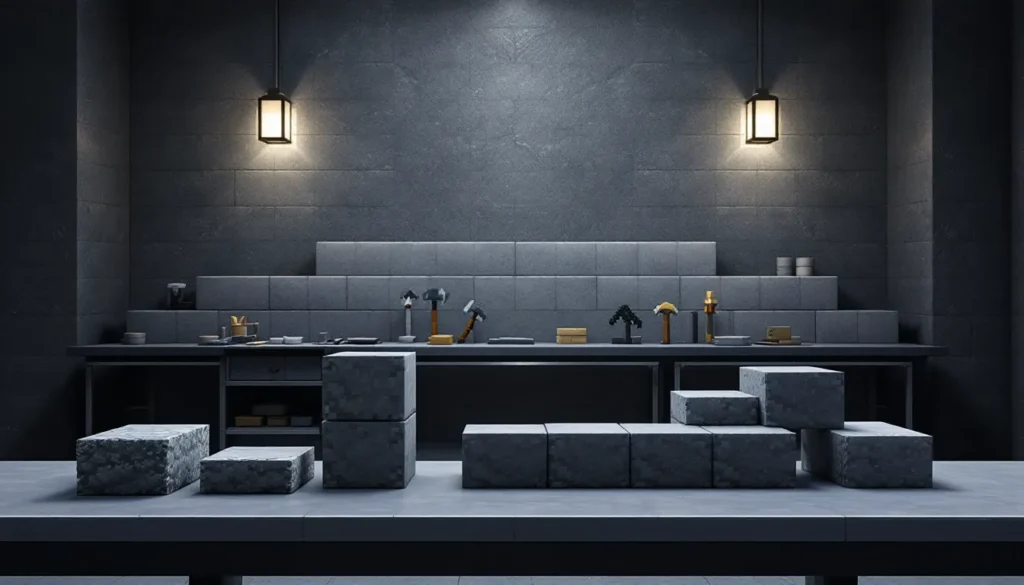
Tuff has a unique gray-green color with a slightly rough, volcanic texture. Unlike diorite or andesite, tuff has a cooler, more industrial feel that works well in modern builds, dungeons, and underground structures. It doesn’t have any special properties like redstone functionality or gravity, it’s purely a building block.
The block is blast-resistant (like most stone blocks) and behaves identically to stone in terms of mining speed and tool requirements. What sets tuff apart is its aesthetic and the variety of decorative variants it unlocks through crafting.
Where to Find Tuff Blocks
Tuff Generation in the Overworld
Tuff generates naturally in the Overworld as part of ore veins and in blobs within the deepslate layer. You’ll most commonly encounter it in large patches alongside iron ore, copper ore, and deepslate. These blobs can be massive, sometimes spanning dozens of blocks, making tuff one of the easier decorative stones to gather in bulk.
Tuff also appears in certain cave biomes, particularly in the deeper sections of the underground. If you’re spelunking below Y=0, you’ll run into tuff frequently. It’s not tied to any specific biome on the surface, so it spawns universally across all Overworld terrain types.
Best Y-Levels for Finding Tuff
Tuff spawns most reliably between Y=-16 and Y=0, with the highest concentration around Y=-8 to Y=-16. This is the deepslate layer, where tuff blobs are large and abundant. If you’re strip-mining or building a tunnel network in this range, you’ll collect tuff almost passively.
Above Y=0, tuff becomes much rarer and only appears in small, scattered pockets. Below Y=-16, it still spawns but competes with more deepslate and ore veins, so the sweet spot for dedicated tuff farming is that mid-negative Y range. Bring a beacon with Haste II if you’re planning a serious mining session, it speeds up the grind significantly.
How to Mine Tuff Efficiently
Required Tools and Enchantments
Tuff requires a pickaxe to mine. Any pickaxe tier works, wood, stone, iron, diamond, or netherite, so there’s no tool gate here. But, using a higher-tier pickaxe speeds up the mining process. Netherite pickaxes are ideal for bulk mining, especially when paired with enchantments.
The best enchantments for tuff mining are:
- Efficiency V: Cuts mining time dramatically. Essential for large-scale harvesting.
- Unbreaking III: Extends tool durability, reducing the need for repairs.
- Mending: Keeps your pickaxe in top shape if you’re mining near mobs or have an XP farm nearby.
- Fortune III: Does not apply to tuff, it drops itself regardless of enchantment.
- Silk Touch: Not necessary for tuff, as it drops itself naturally.
If you’re farming tuff in bulk, consider setting up a Haste II beacon in your mining area. The speed boost stacks with Efficiency V and makes tuff mining feel almost instant.
Fastest Mining Techniques
The fastest way to mine tuff is branch mining or tunnel boring at Y=-8 to Y=-16. Create a 2-block-high tunnel and dig in straight lines, spacing branches every 3-4 blocks. Tuff blobs are large enough that you’ll hit them repeatedly with this method.
If you’re not worried about precision, TNT mining or bed mining can clear huge volumes of tuff quickly, but you’ll lose some blocks to explosions. For players who prefer efficiency without waste, stick to pickaxe mining with Efficiency V and Haste II.
Another tip: use chunk borders (F3+G on Java Edition) to track your mining pattern and avoid redundant tunnels. Tuff blobs often stretch across multiple chunks, so systematic mining prevents missed pockets.
Tuff Variants and Related Blocks
Polished Tuff
Polished Tuff is the first crafted variant. It has a smoother, more refined texture than raw tuff, with the rough surface replaced by clean, uniform lines. It’s crafted by placing four tuff blocks in a 2×2 grid in a crafting table, yielding four polished tuff blocks.
Polished tuff is excellent for floors, walls, and any surface where you want a cleaner look without losing tuff’s signature color. It pairs well with concrete, terracotta, and other polished stone blocks.
Tuff Bricks
Tuff Bricks take the polished tuff aesthetic and add a brick pattern. Many builders consider this the best-looking tuff variant, it has a structured, architectural feel that works in castles, modern builds, and industrial designs.
Craft tuff bricks by placing four polished tuff blocks in a 2×2 grid, yielding four tuff bricks. The brick pattern is subtle but adds enough detail to break up large flat surfaces.
Tuff bricks are popular in dungeons and fortress builds. The gray-green tone gives them a weathered, ancient look that fits perfectly with cracked stone bricks and mossy cobblestone.
Chiseled Tuff and Tuff Stairs, Slabs, and Walls
Chiseled Tuff features a decorative pattern similar to chiseled stone bricks. It’s crafted by stacking two tuff slabs vertically in a crafting table. Use chiseled tuff as an accent block, pillar caps, doorway frames, or wall inlays.
Tuff also comes with a full set of stairs, slabs, and walls. These are crafted using the standard recipes:
- Tuff Stairs: 6 tuff or tuff bricks in a stair pattern = 4 stairs
- Tuff Slabs: 3 tuff or tuff bricks in a horizontal row = 6 slabs
- Tuff Walls: 6 tuff or tuff bricks in two horizontal rows = 6 walls
Each variant (raw tuff, polished tuff, tuff bricks) has its own stairs, slabs, and walls, giving you a huge range of decorative options. For intricate builds, mixing these variants creates depth and texture without clashing colors.
Crafting Recipes for Tuff Blocks
Here’s a quick reference for all tuff crafting recipes:
Polished Tuff
- 4 tuff blocks (2×2 grid) → 4 polished tuff
Tuff Bricks
- 4 polished tuff (2×2 grid) → 4 tuff bricks
Chiseled Tuff
- 2 tuff slabs (stacked vertically) → 1 chiseled tuff
Tuff Stairs (any variant)
- 6 tuff, polished tuff, or tuff bricks (stair pattern) → 4 stairs
Tuff Slabs (any variant)
- 3 tuff, polished tuff, or tuff bricks (horizontal row) → 6 slabs
Tuff Walls (any variant)
- 6 tuff, polished tuff, or tuff bricks (two horizontal rows) → 6 walls
All recipes are crafted in a standard crafting table. There are no stonecutter-exclusive tuff recipes as of the latest updates, though using a stonecutter is more efficient for stairs, slabs, and walls, it yields more blocks per input.
For example, cutting tuff bricks in a stonecutter gives you 1 slab per brick, whereas crafting yields 6 slabs for 3 bricks. Always use the stonecutter when available to maximize your tuff supply.
How to Use Tuff in Building and Design
Modern and Industrial Build Styles
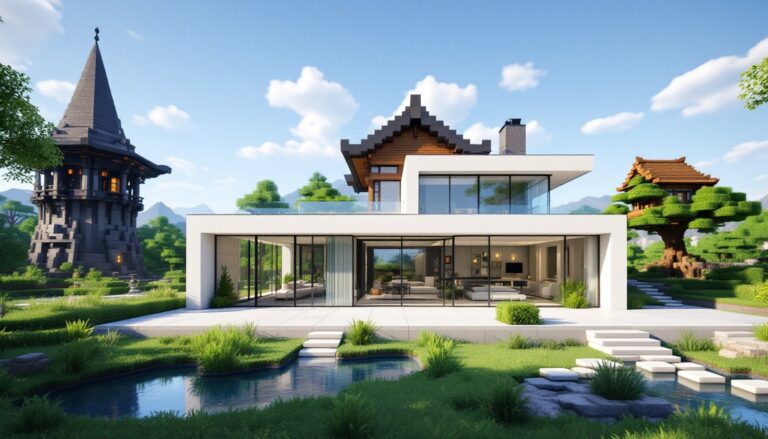
Tuff’s gray-green tone and smooth texture make it a go-to for modern and industrial builds. It pairs exceptionally well with concrete (especially light gray, white, and cyan), iron blocks, glass panes, and stripped dark oak logs. The cooler palette of tuff contrasts nicely with warmer woods like acacia or jungle planks.
Use polished tuff or tuff bricks for building facades, rooftops, and accent walls. Tuff stairs and slabs work great for minimalist rooflines and geometric shapes. For factories or warehouses, combine tuff with iron bars, anvils, and cauldrons to reinforce the industrial vibe.
Tuff also shines in urban builds. Streets paved with tuff slabs, sidewalks with tuff walls, and storefronts framed with tuff bricks create a cohesive city aesthetic. Players who enjoy modern texture packs often highlight tuff as a block that scales well in contemporary designs.
Underground and Cave Builds
Since tuff spawns naturally underground, it’s perfect for cave bases, mines, and dungeons. Its volcanic texture blends seamlessly with deepslate, stone, and ore blocks, making it easy to expand natural caves without disrupting the aesthetic.
Use raw tuff to preserve the rugged cave feel, or polish it for a more refined underground hall. Tuff bricks work beautifully in dwarven-style fortresses, ancient temples, and secret lairs. Combine tuff with mossy cobblestone, cracked stone bricks, and chains for an aged, dungeon-crawler atmosphere.
For survival-focused players, tuff is abundant in the deepslate layer, so you can build large underground structures without needing to haul materials from the surface. It’s also blast-resistant, making it a solid choice for creeper-proofing your base.
Combining Tuff with Other Blocks
Tuff’s neutral color makes it versatile for block palettes. Here are some high-synergy combinations:
- Tuff + Deepslate: Natural pairing for underground builds. Use tuff bricks and deepslate tiles for layered walls.
- Tuff + Concrete: Gray, light gray, and cyan concrete create modern, clean designs with tuff accents.
- Tuff + Stone Bricks: Mix tuff bricks with cracked or mossy stone bricks for medieval castles and ruins.
- Tuff + Stripped Logs: Dark oak, spruce, or mangrove logs contrast well with tuff’s cool tones. Great for rustic or industrial builds.
- Tuff + Copper: Weathered or oxidized copper pairs beautifully with tuff for steampunk or aged industrial designs.
Experiment with tuff slabs and stairs to add depth. Layering different tuff variants (raw, polished, brick) in the same build creates texture without color clashing.
Tuff vs. Other Stone Blocks: Which Should You Use?
Tuff competes with several other stone blocks for build priority. Here’s how it stacks up:
Tuff vs. Deepslate
Deepslate has a darker, grittier texture and more variants (tiles, polished deepslate, deepslate bricks). Tuff is lighter and cooler in tone. Use deepslate for darker, moody builds and tuff for modern or industrial aesthetics. Both spawn in the same Y-range, so you’ll often collect them together.
Tuff vs. Andesite
Andesite is warmer and speckled, while tuff is cooler and more uniform. Andesite works better in rustic or natural builds: tuff fits modern and underground designs. Polished andesite and polished tuff serve similar roles, but tuff’s color is more distinct.
Tuff vs. Stone Bricks
Stone bricks are the classic medieval building block. Tuff bricks offer a similar structure but with a unique color. If you want something that feels ancient but not generic, tuff bricks are the move. Stone bricks are easier to farm via smelting and crafting, while tuff requires mining at specific Y-levels.
Tuff vs. Concrete
Concrete offers vibrant, solid colors: tuff provides texture and a natural feel. Concrete is better for clean, modern builds with bold palettes. Tuff is better for textured, layered designs. Many builders use concrete for primary structures and tuff for accents and detailing.
In general, tuff excels when you want a stone block that isn’t stone or cobblestone. Its distinct color and texture make it a strong choice for players who want their builds to stand out without using flashy materials like quartz or prismarine.
Advanced Tips and Tricks for Tuff
Bulk Farming with Beacons
Set up a Haste II beacon at Y=-12 and carve out a massive mining area. With Efficiency V on a netherite pickaxe, you’ll collect thousands of tuff blocks per hour. This is ideal for megabuilds or city projects where you need consistent block quantities.
Use a Stonecutter for Efficiency
Always craft stairs, slabs, and walls in a stonecutter instead of a crafting table. You’ll get more output per block, stretching your tuff supply further. For example, one tuff brick yields one slab in a stonecutter vs. three bricks for six slabs in a crafting table.
Mix Tuff Variants for Depth
Don’t stick to one tuff type. Layer raw tuff, polished tuff, and tuff bricks in the same wall or floor to create depth and visual interest. Use chiseled tuff sparingly as an accent, it’s too detailed to overuse.
Tuff in Redstone Builds
Tuff is a full block with no redstone properties, making it safe for redstone builds where you need non-conductive blocks. It’s also visually distinct, so it won’t blend with stone or deepslate in technical builds.
Combine with Modded Textures
If you’re running resource packs or mods, tuff often gets unique treatment. Some texture packs enhance its volcanic look, while others modernize it further. Check modded build showcases on platforms like Game8 for inspiration on how others are using tuff in customized environments.
Tuff for Map-Making
For custom maps or adventure builds, tuff’s neutral color and blast resistance make it excellent for hidden structures, puzzle rooms, and dungeon crawling. It’s less common than stone bricks, so players notice it more when it appears.
Pair Tuff with Lighting
Tuff’s gray-green tone looks especially good with soul lanterns, soul torches, and shroomlights. The cooler lighting complements the block’s natural hue. Avoid warm lighting like torches or lanterns if you want to preserve tuff’s modern or eerie aesthetic.
Conclusion
Tuff has evolved from a forgettable cave block into a builder’s essential. Its unique color, full set of variants, and abundance in the deepslate layer make it one of the most accessible and versatile decorative stones in Minecraft. Whether you’re designing a modern skyscraper, carving out an underground fortress, or just looking for a fresh alternative to stone bricks, tuff delivers.
Mine it efficiently at Y=-8 to Y=-16, craft it into polished tuff and tuff bricks for maximum design flexibility, and don’t sleep on the stonecutter for resource efficiency. Tuff pairs well with nearly every block palette, and its neutral tone means it’ll never clash with your other materials.
Now get out there and start mining. Your next build is waiting.