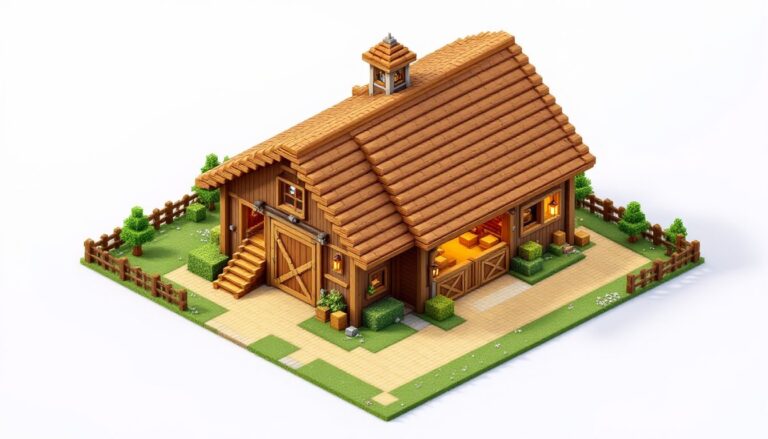
Building a functional Minecraft barn isn’t just about throwing together some wood and a roof. A well-designed barn becomes the centerpiece of your survival base, a place to house animals, store crops, and honestly, flex your building skills. Whether you’re working toward a medieval house minecraft aesthetic or prefer something more practical, the foundation of any great barn starts with smart planning and the right materials. This guide walks you through every stage, from site selection to the final decorative touches, so your Minecraft barn serves as both a working farm and a showstopper structure.
Table of Contents
ToggleKey Takeaways
- Choose a flat, well-lit location near water away from hostile mobs to establish the foundation for a functional Minecraft barn that works as both storage and showpiece.
- A 20×15 rectangular barn layout with a raised foundation of 1–2 blocks prevents mob spawning and provides an ideal size for beginners while accommodating multiple animal types.
- Alternate wood columns with stripped or dark oak logs and add exterior bracing posts every 4 blocks to create visual depth and make your Minecraft barn feel structurally intentional.
- Interior storage, lighting placed 8 blocks apart with lanterns and campfires, and floor variation using mixed materials prevent mobs from spawning while breaking visual monotony.
- Divide your barn into dedicated animal pens using fence gates—horses in 4×6 stalls, cows/sheep in 3×3 groups, and chickens in smaller communal areas—for easier management and breeding.
- Layer decorative details like hanging item frames, armor stands, hay bales, and a consistent 2–3 color palette to transform your barn from purely functional into an immersive, lived-in homestead.
Choosing The Right Location And Gathering Materials
Before you place a single block, location matters. Your barn should sit on relatively flat terrain near water (for animals and crops), away from cliffs or caves that could spawn hostile mobs inside. Ideally, position it where it gets natural light during the day and stands out from your main base, this makes the barn feel like its own space.
Gathering materials is straightforward but requires planning. For a solid 20×15 barn, you’ll need:
- Wood blocks (oak, spruce, or dark oak): ~400–500 blocks depending on wall thickness
- Roofing materials (stairs, slabs, or full blocks): ~200–300 blocks
- Foundation blocks (stone, stone bricks, or dirt): ~300 blocks
- Interior décor (doors, fences, gates, hay bales): Variable based on design
Collect extra wood from trees, never skimp here. Strip bark logs work great for interior framing and visual contrast. Spruce complements a medieval house minecraft build, while oak feels versatile across styles. Don’t forget a crafting table, chest, and furnace to process materials on-site.
Planning Your Barn Foundation And Layout
Sketch your barn’s footprint before building. A rectangular 20×15 layout is ideal for beginners, large enough for multiple animal types but manageable to construct. Lay out the perimeter using temporary blocks (dirt works fine) so you can visualize spacing and doors.
The foundation matters more than players realize. Raise your barn 1–2 blocks above ground to prevent mobs spawning underneath and to let water flow naturally around it. Use stone bricks or variant stone for a barn on minecraft that feels grounded and durable. Create a 2–3 block border around the base for visual distinction.
Plan entrance and exit points now. Two double doors, one for you, one for animals moving in and out, give flexibility. Place doors on opposite sides to reduce congestion. Mark where animal pens, hay storage, and crop areas will go. A central aisle running lengthwise keeps navigation clean and realistic.
Building The Barn Structure And Roof
Start walls with full wooden blocks up to 8 blocks high. Alternate wall styles, place every other column as stripped or dark oak logs to break monotony and add depth. This mimics actual barn framing and looks intentional, not lazy.
For a barn on minecraft that feels structurally sound, add exterior bracing. Place fence posts or log columns at corners and every 4 blocks along walls. This isn’t just decoration, it visually anchors the structure.
The roof is where barns shine. A steep gable roof (two triangular sides meeting at a peak) suits medieval and rustic styles. Start at block height 8 and slope upward using stairs and slabs:
- Layer 1: Full blocks at height 9
- Layer 2: Stairs angled inward at height 10
- Layer 3: Stairs again, creating a pointed peak
Use dark oak or spruce stairs to add visual weight. Extend the roof 1–2 blocks beyond walls for an overhang, this protects animals from rain and looks authentic. Add a chimney using dark bricks in one corner if you plan to smoke meat or for pure aesthetics.
Adding Interior Details And Storage
Empty space kills a barn’s vibe. Start with functional storage: hay bales (crafted from wheat) in one corner, wooden crates (barrels or trapped chests) for miscellaneous items, and a dedicated area for tools and saddles.
Interior lighting prevents mob spawning and looks professional. Place lanterns hanging from wooden beams using fence posts or chains. Space them 8 blocks apart, enough for safety without being overkill. Use campfires in corners for ambiance: they also serve as working fireplaces.
Floor variation breaks visual monotony. Mix wooden planks with dirt or gravel paths. This mirrors real barns where heavy foot traffic wears down certain areas. Layer in occasional trap doors or carpet for texture without overdoing it.
Add functional interior structures: a tack room (small corner with saddles, reins, and armor stands), a feed station (crafting table surrounded by grain storage), and a hay loft area using stairs or slabs along one wall. Install bookshelves near a lectern as a farm records station, purely roleplay but immersive.
Designing Functional Animal Pens And Stalls
Divide your barn into dedicated zones for different animals. Separate areas prevent chaos and make feeding easier. Use fence gates (not doors, animals get stuck on doors) to divide sections.
Livestock layout:
- Horses/donkeys: 4×6 stalls, one per animal, with fencing and gates
- Cows/sheep: 3×3 pens, groups of 4–6 animals per pen
- Chickens/rabbits: Small 2×2 cages or a larger communal roost
- Breeding pairs: Isolated stalls with extra space
Pair each pen with a hay loft or feeder area. Place composters near the entrance to deposit bones and scraps. Install water channels along pen edges, animals drink from any water source, and flow prevents waste accumulation.
Add bells or sign boards above each pen labeling animal types. This is purely decorative but creates role-play depth. Use armor stands positioned as if tending animals for extra character.
Decorating Your Barn With Style And Functionality
A medieval house minecraft aesthetic shines when details feel intentional. Outside, place flower pots with sunflowers or wheat along the foundation. Lean wooden crates (anvils, barrels) against exterior walls. A hitching post (fence posts with leads attached to armor stands) signals a working farm.
Inside, string lanterns between beams using carpet on fences. Hang paintings or item frames showing farm life, saddles, wheat, seeds, hoes. Place brewing stands near the entrance as if making potions or storing tools. Use signs to mark storage areas or create a homemade notice board.
Weather-worn details matter: scatter hay bales on the floor, lean shovels and hoes against corners using armor stands, and place carts (minecarts on tracks) as if moving goods. None of these block function, they layer on atmosphere.
For a survival-focused barn, minecraft barn design inspiration shows practical layouts balancing aesthetics and efficiency. Keep the color palette tight, stick to 2–3 primary colors (dark oak, stone, and one accent like dark prismarine or dark oak stairs) so details feel cohesive rather than chaotic.
Conclusion
Your barn transforms a base from functional camp to lived-in homestead. Start with solid planning, location, materials, and layout, then layer structure, interiors, and decoration. A well-built Minecraft barn houses animals, stores crops, and serves as a gathering hub. Whether you’re crafting a medieval house minecraft or a sleek survival structure, these steps create something you’ll actually use and enjoy for hundreds of hours.