Minecraft Dungeons strips away the block-building and throws you into a fast-paced, action-packed dungeon crawler that feels like a completely different beast from the original Minecraft experience. If you’re used to mining ores and constructing pixel-perfect structures, prepare yourself, this spinoff is all about combat, loot management, and surviving increasingly brutal difficulty tiers. Whether you’re a casual player looking to understand the basics or someone grinding for the perfect gear roll, this guide covers everything from your first steps through endgame farming strategies. We’ll break down combat mechanics, explain how enchantments actually work, and give you a clear progression path so you’re not wandering aimlessly through dungeons wondering where to go next.
Table of Contents
ToggleKey Takeaways
- Minecraft Dungeons is an isometric action-adventure game focused on fast-paced combat and loot collection, completely different from the block-building mechanics of the original Minecraft.
- Prioritize equipping the highest power-level gear early on and don’t neglect armor, as damage reduction and protective enchantments are crucial for surviving tougher encounters.
- Master enchantment systems on weapons and armor to dominate endgame content, with current meta favoring critical builds and poison/summon synergies across all difficulty tiers.
- Follow the recommended story progression from Creeper Woods through the Nether and End dungeons, then farm your favorite locations repeatedly on Apocalypse difficulty for perfect gear rolls.
- Use four-player co-op multiplayer to tackle brutal Apocalypse+ content more safely, leveraging team composition and balanced offense-defense builds for faster clears.
What Is Minecraft Dungeons and How Does It Differ from the Original Game?
Minecraft Dungeons is an isometric action-adventure game released in 2020 that ditches creative survival gameplay entirely. Instead of placing blocks and managing hunger, you’re hacking through waves of mobs with swords, bows, and magic while collecting loot and leveling up. The game launched on PC, Xbox, PlayStation, and Nintendo Switch, with mobile versions following later.
The core difference from the original Minecraft is perspective and purpose. Dungeons uses a top-down camera angle, procedurally generates dungeon layouts, and focuses on combat encounters. You pick one of several difficulty levels, ranging from Peaceful to Apocalypse, that fundamentally change enemy behavior and loot quality. The progression system is entirely loot-based: there’s no crafting table, no mining, and no building. Instead, you farm dungeons, collect better gear, and push into harder content.
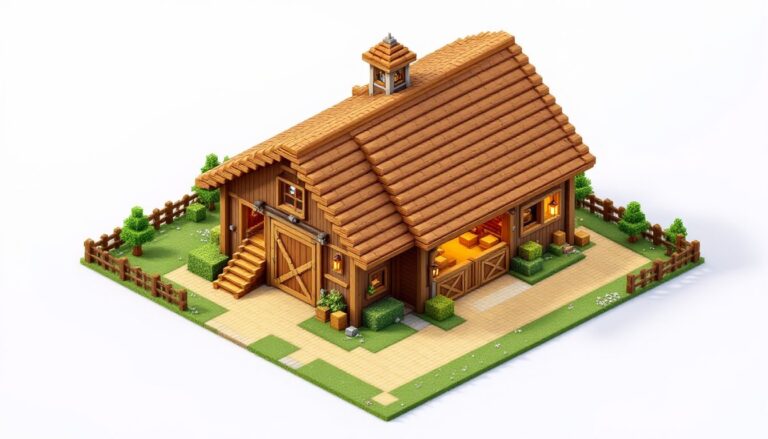
Dungeons also feels like a bridge between Minecraft’s universe and traditional action RPGs. You’ll recognize mobs from the original game, encounter familiar landscapes like the Overworld and Nether, and even handle Minecraft barn structures and farm layouts within dungeons, but wrapped in a combat-first framework that demands skill and strategy.
Getting Started: Character Creation and Essential Early-Game Tips
When you boot up Minecraft Dungeons, you’ll design your hero’s appearance, nothing affects stats, so go wild with cosmetics. Then you’re thrust into the first dungeon.
Early-game progression is straightforward: complete the first few dungeons on lower difficulties, collect whatever gear drops, and equip items with higher power levels. Don’t get hung up on specific weapons or enchantments yet: your priority is understanding combat fundamentals and recognizing gear tiers. You’ll notice loot has rarity colors (common, rare, unique) and power levels that scale with difficulty.
Here’s what beginners miss: Power level matters more than specific stats early on. A rare sword at power 50 will outperform a unique sword at power 30, full stop. Once you hit the harder difficulties, this changes, but for the first playthrough, equip the highest-power gear available and move forward. Also, don’t sleep on armor. Protective gear seems boring compared to flashy swords, but damage reduction stacks and will keep you alive through tougher encounters. Finally, experiment with artifacts. These special items grant active abilities (healing, crowd control, turrets) and change how you approach each dungeon. Finding the right artifact combination matters more than you’d think.
Combat Mechanics and Weapon Enchantments Explained
Minecraft Dungeons combat is deceptively tactical. You’ve got a main weapon, a ranged option (usually a bow), an artifact, and armor. Melee attacks generate mana, which you use to trigger abilities or activate artifacts. Range and positioning matter, kiting enemies around terrain is often smarter than face-tanking.
Enchantments are the heart of endgame builds. Every piece of gear rolls with up to three enchantment slots. Early enchantments are generic (damage boosts, life steal), but late-game options dramatically reshape playstyle. Sharpness increases weapon damage, Swirling boosts crowd control, Crit Chance scales with attack speed. The meta constantly shifts between patches, but as of 2026, Crit builds and poison/summon synergies dominate. You’ll want to farm specific dungeons repeatedly to chase perfect rolls on key items.
Understanding Armor and Protective Gear
Armor is more than just fashion. Different armor types offer distinct perks: plate armor grants extra health and thorns (reflects damage), robes provide mana regeneration, and lighter gear speeds up movement. Building for survivability sounds boring but lets you farm harder difficulties safer. A common mistake is neglecting armor entirely in favor of offensive weapons. The game rewards balanced builds: you’re dead weight to multiplayer partners if you can’t stay alive long enough to deal damage. Armor also has enchantment slots, and protective enchantments like Thorns and Life Steal create defensive synergies that trivialize certain encounters once stacked correctly.
Dungeons to Conquer: Recommended Progression Path and Boss Strategies
Minecraft Dungeons includes a set story progression and optional secret levels. The recommended path follows the campaign: Creeper Woods → Cacti Canyon → Fiery Forge → Soggy Swamp → Desert Temple → Jungle Awakens (DLC) → Nether (DLC) → End (DLC). Each area has an Apocalypse+ difficulty variant once you’ve beaten the base version. Unlike Minecraft’s biomes or mine craft farms, these dungeons are handcrafted encounters, not infinite procedural spaces.
Key bosses include the Arch-Illager (final campaign boss), the Wither (optional late-game nightmare), and various mini-bosses tied to specific dungeons. Strategy varies: Arch-Illager requires avoiding his projectile spam while staying mobile: the Wither demands sustained DPS and healing management.
For efficient farming, Minecraft Dungeons guides on Twinfinite break down optimal routes for gear grinding. Once you’ve cleared the campaign on a higher difficulty (Apocalypse or higher), replay your favorite dungeons repeatedly to chase better enchantment rolls on BiS (best-in-slot) gear. Most veterans farm Desert Temple or Nether Wastes because these dungeons drop specific loot pools and have reasonable run times.
Multiplayer Gameplay and Cooperative Features
Minecraft Dungeons supports up to four-player co-op, available on all platforms. Multiplayer scales difficulty and loot based on player count, meaning harder fights but better drops. This is where build synergy matters: a team with balanced offense and defense clears content faster than four glass cannons.
Cooperative play is cross-platform on console (Switch, PlayStation, Xbox) and PC, though cross-platform play between console and PC isn’t supported yet. Matchmaking is straightforward, queue for a dungeon and randoms join, or invite friends directly.
Common multiplayer pitfalls: don’t rush ahead into rooms alone, communicate positioning before boss fights, and understand that sharing loot means fewer drops per person. The tradeoff is worth it for harder content, Apocalypse+ feels brutal solo but manageable with competent teammates. Game8’s Minecraft Dungeons walkthrough includes tier lists and build suggestions that help you evaluate whether your current loadout fits team compositions. For mod support and community-driven tools, Nexus Mods hosts texture packs and tweaks, though note that mods are primarily PC-exclusive and some servers don’t allow them in multiplayer.
Conclusion
Minecraft Dungeons is a streamlined action game that respects your time while offering surprising depth in build crafting and difficulty scaling. Whether you’re casually progressing through the campaign or grinding Apocalypse tiers for perfect enchantment rolls, the core loop, kill mobs, collect loot, upgrade gear, is satisfying from hour one. The gap between casual and competitive play is significant, but the game scales gracefully at every tier. Start fresh, experiment with different weapons and artifacts, find your preferred difficulty sweet spot, and most importantly, have fun. The meta will shift with patches, but solid fundamentals and good gear management will carry you through any dungeon Minecraft throws your way.