Medieval architecture stands out as one of the most visually satisfying builds in Minecraft. Whether you’re roleplaying on a fantasy server, decorating a survival world, or creating cinematic content, nailing the medieval aesthetic takes planning and the right materials. This guide covers everything you need to construct an authentic medieval house in Minecraft, from foundation to finishing touches. You’ll learn which blocks work best, how to avoid common beginner mistakes, and advanced techniques that separate decent builds from jaw-dropping ones.
Table of Contents
ToggleKey Takeaways
- Medieval house Minecraft builds thrive on timber-frame structures using logs, stone brick, and dark-colored roofing blocks that naturally complement Minecraft’s blocky aesthetic.
- Material selection determines authenticity—use 70-80% primary blocks like oak or spruce logs with 20-30% secondary details, and add mossy or cracked stone brick variants to create a weathered, aged appearance.
- Steep roof pitch, recessed doors with small porches, and overhanging eaves by 2-3 blocks create depth and realism that separates immersive medieval designs from flat, simple structures.
- Functional interior details such as cauldrons, barrels, and workbenches transform your medieval house from a hollow shell into a believable lived-in space.
- Adapting your build to terrain—like partially sinking houses into hillsides or using raised foundations in plains—makes medieval structures feel naturally integrated into your world.
Why Medieval Architecture Works in Minecraft
Medieval architecture translates perfectly to Minecraft’s blocky aesthetic. The geometric simplicity of half-slabs, stairs, and logs naturally mimics the timber-frame construction of real medieval homes. Unlike modern or futuristic builds that fight against Minecraft’s limitations, medieval design embraces them.
Block-based structure also means medieval houses read well at any scale. A small cottage uses the same design principles as a sprawling manor, proportion and material selection matter more than size. This accessibility makes medieval builds approachable for new builders while offering endless depth for veterans.
Medieval worlds also create narrative cohesion. When you’re building farms for minecraft or establishing a settlement, medieval houses anchor the aesthetic and make your world feel lived-in. A well-built medieval house becomes the centerpiece that justifies every surrounding structure.
Essential Building Materials for Authenticity
Material selection defines your medieval build. Here’s what works best:
Primary blocks:
- Oak, Spruce, or Dark Oak logs – The foundation of any medieval house. Spruce carries a European feel: dark oak reads heavier and more imposing.
- Stripped logs – Use these as accent pieces to show structural beams. The contrast with full logs adds depth.
- Stone brick and mossy stone brick – Wall infill between timber frames. Mossy variants add age and character.
- Cobblestone and mossy cobblestone – Budget-friendly alternative to stone brick, works for lower-income builds.
- Roofing blocks – Dark oak, spruce, or blackstone stairs and slabs layer textures. Avoid bright colors: medieval means earthy tones.
Secondary details:
- Doors and trapdoors – Oak or dark oak match timber frames. Use trapdoors as window shutters.
- Fences and fence gates – Create railings, support structures, and window grilles.
- Campfires and lanterns – Functional lighting that fits the aesthetic. Place them near entrances or inside through windows.
Avoid bright blocks like terracotta unless you’re intentionally building a lower-class dwelling. Medieval architecture relies on muted earth tones and weathered appearances. Mixing 70-80% primary blocks with 20-30% secondary materials maintains visual balance.
Step-by-Step Medieval House Design
Creating the Foundation and Frame
Start with a rectangular footprint, 12×16 blocks is ideal for a medium farmhouse, though smaller works too. Mark corners with temporary blocks so you can visualize scale.
Lay down your foundation using cobblestone or stone brick, extending one block higher than ground level. This creates a subtle basement effect and prevents mobs from easily finding gaps.
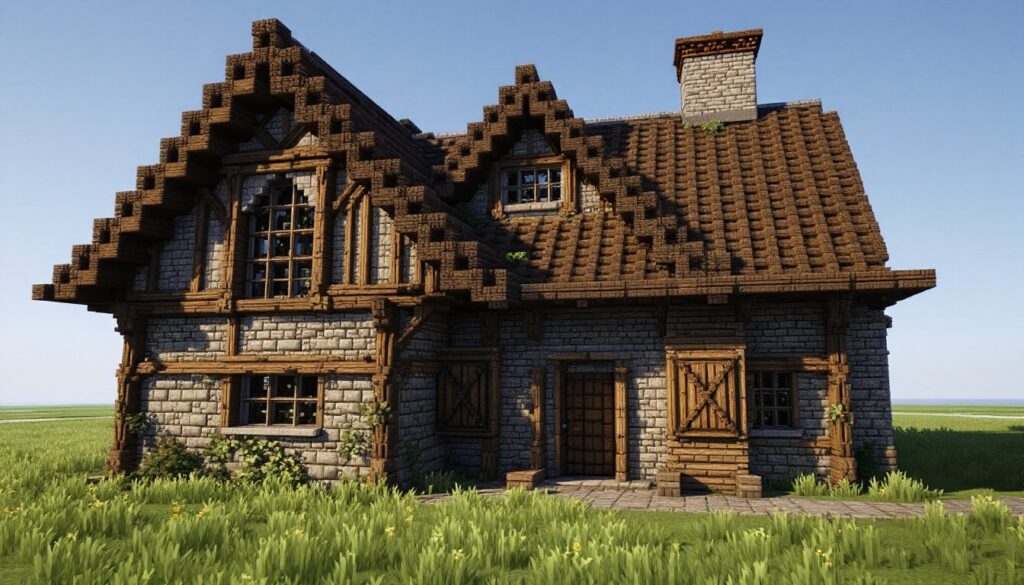
Place logs vertically at corners and every 4-5 blocks along walls. These are your structural posts. Use stripped logs between them as horizontal beams, connect them at waist height and again higher up. This timber-frame pattern is the signature medieval look.
Building Walls and Adding Detail
Fill the space between timber frames with stone brick. Leave 1-2 block-wide vertical gaps for window openings, don’t make windows too large or walls feel flimsy. Oak planks also work as infill for variation.
Add window frames using dark oak or spruce stairs placed sideways. Layer trapdoors over windows to create shutters that actually open. This small detail elevates immersion dramatically.
Roof placement matters enormously. Use dark stairs to create a steep pitch (steep roofs shed snow and read as “old”). Build the frame first, place logs to define ridge and eave lines, then layer stairs and slabs downward. Overhang the roof 2-3 blocks beyond walls for shadow and realism.
Doors should feel recessed. Carve out a small porch using the same timber-frame technique, then place your door inset by 1-2 blocks. This breaks up flat walls and creates depth.
Advanced Tips to Elevate Your Medieval Build
Vary your block textures. Use mossy variants on the shadiest sides of walls. Place 1-2 cracked stone brick blocks randomly to imply age. This weathering effect is the difference between “looks like a block house” and “looks authentic.”
Add functional interior details. Place a cauldron as a water basin, use barrels for storage, and set up a simple crafting area with a workbench. These reinforce the medieval living space beyond just walls.
Create cohesion with neighboring structures. If you’re building multiple buildings, like farmers minecraft or medieval houses as part of a larger settlement, match roof pitches and primary materials across all structures. Consistency reads as intentional design.
Use negative space strategically. Chimneys, alcoves, and recessed sections break up flat walls. A chimney on one side (just a column of logs extending above the roof) immediately signals “lived in.”
Consider your location. Medieval houses on hillsides feel more natural when partially sunken. In plains, a small raised foundation works better. Adapt your build to terrain rather than flattening everything.
If you want comprehensive inspiration, community resources like Minecraft building tutorials for medieval architecture showcase real-world examples. Meanwhile, understanding how villagers settle their homes informs spacing and compound design when scaling up from a single house to a village.
Once your exterior is solid, interiors demand equal attention. Kitchen design for medieval builds focuses on practical cooking areas, and bed placement becomes a statement piece in your sleeping quarters.
Conclusion
Building a medieval house in Minecraft rewards attention to material choice, proportion, and detail. Start with timber-frame structure, fill walls with stone, add weathering variation, and create depth through recesses and overhangs. These fundamentals work whether you’re building a single farmhouse or an entire settlement. Practice the techniques here, study existing builds for inspiration, and your next medieval project will feel genuinely immersive rather than like disconnected blocks.