Building a Minecraft castle is one of the most rewarding projects a player can tackle. Whether you’re looking to create a medieval stronghold, a fantasy fortress, or a blackstone fortress, the process demands planning, resources, and creativity. A well-designed Minecraft castle serves as both a functional base and a visual centerpiece that showcases your building skills. This guide walks you through every phase of castle construction, from initial design concepts through final decoration, ensuring your fortress stands out and lasts. By the end, you’ll have a concrete roadmap to construct something truly epic.
Table of Contents
ToggleKey Takeaways
- Plan your Minecraft castle design before building by choosing a style, sketching the footprint, and assigning functional zones like throne rooms, bedrooms, and storage areas to avoid rework.
- Use varied building materials—stone bricks, deepslate, blackstone, and dark wood—layered in 2–3 block-deep walls to create architectural depth and prevent a flat, featureless appearance.
- Add visual impact with towers at corners, battlements, arrow slits, and defensive features like moats and drawbridges to define your castle’s silhouette and fortress fantasy.
- Fill your castle shell with purposeful interior spaces including a central throne room, organized storage rooms, and distinct halls with appropriate lighting and decorative elements.
- Elevate your castle from good to legendary using advanced decorations: layered roofs with peaks, vines for aging effects, custom landscaping, and strategic lighting that transforms the structure at night.
Planning Your Castle Design
Before swinging a single pickaxe, spend time visualizing your castle. Decide on a style: medieval stone, fantasy-inspired, modern blackstone aesthetic, or a mixed-material blend. This choice shapes everything that follows, block palette, tower design, and decorative elements all flow from your core aesthetic.
Sketch out the footprint on paper or in creative mode first. Will it be a rectangle, square, or irregular fortified layout? Where should the main gate sit? Which corners need towers? How tall should your walls rise? Planning these details upfront saves hours of rework later.
Think about functionality next. Every castle needs specific zones: a throne room as the centerpiece, bedrooms for players, storage areas for loot, an armory for weapons and tools, a kitchen, a library, and ideally a courtyard. Assigning spaces before building prevents cramped, illogical layouts. Sketch room locations on your footprint so transitions feel natural when you build.
Gathering Resources and Building Materials
Material choice makes or breaks your castle aesthetic. Stone variants form the core: stone, cobblestone, stone bricks, and mossy stone bricks work for medieval styles. For darker fortresses, deepslate and blackstone provide depth. Dark oak and spruce wood add warmth as accents and trim.
Don’t sleep on decorative blocks. Slabs, stairs, and trapdoors break up flat surfaces and add architectural detail. Fences, lanterns, banners, and carpets define spaces and guide the eye. Glass panes suggest windows without blocking sightlines.
Functional blocks matter too: doors for entrances, iron bars for prison cells or grated windows, campfires for atmosphere, beds, chests for storage, furnaces, and anvils for working areas. A large castle typically demands hundreds of stone blocks and dozens of wood logs. Start mining or use a flat world if you’d rather focus purely on the build itself. Consider that one Minecraft bed ideas inspiration might be to create ornate sleeping quarters, Minecraft Bed Ideas: 50+ shows exactly how to elevate simple bedrooms into statement spaces.
Constructing the Foundation and Walls
Lay out your base shape using a single block type first, this acts as your guideline. A rectangle works for traditional castles: squares are easier to manage. Mark corners and gate openings clearly.
Build thick foundation walls. Thin walls look flimsy: aim for at least 2-3 blocks deep. This depth supports towers and higher levels structurally and visually. Layer your stones: use stone brick on the outer face, cobblestone in the middle, and whatever accent block fits your theme inside. This depth technique prevents the “flat slab” look that drags down otherwise solid builds.
Add variation as you go up. Swap between stone and mossy variants, use slabs to create uneven surfaces, place stairs to suggest erosion or depth. Leave openings for gates at the front and side entrances. Courtyard spaces break up massive walls and provide light and air to interior rooms. The goal is walls that look lived-in and fortified, not like a featureless cube.
Adding Towers and Defensive Features
Towers define castle silhouettes. Place them at corners for symmetry or at key wall junctions for tactical realism. Make towers taller than the main walls, they’re meant to dominate the skyline.
Defensive details sell the fortress fantasy. Battlements and crenellations (the notched tops of castle walls) look iconic and are simple: use stairs and slabs to create the jagged pattern. Arrow slits, thin vertical openings in walls, suggest medieval combat readiness. Portcullis-style entrances (using trapdoors and iron bars stacked vertically) look intimidating and functional.
Consider a moat, drawbridge, or outer wall. These don’t need to be practical in survival mode, but they add massive visual impact. A moat can be filled with water, dark concrete, or simply left as a deep trench. A drawbridge (pistons pushing a platform up and down, if you’re in Java or Bedrock with redstone) or a static bridge over the moat adds drama. Community-built castles like those featured on Top 10 Best Minecraft Castle Designs and Ideas showcase how towers and defensive elements work together at scale.
Interior Design and Room Layouts
Now fill your shell with life. A throne room anchors the castle, place it near the entrance for impact. Use a large, open space with a raised dais (elevated platform) at the end. A throne can be built from stairs, slabs, and decorative blocks or crafted from existing blocks.
Bedrooms work best off main hallways. Use beds as the centerpiece, then add chests, bookshelves, and lanterns. Storage rooms deserve multiple chests organized logically, separate tools from food, weapons from building blocks. An armory displays armor stands with full sets of gear.
Large halls (dining, library, map room) benefit from centered symmetry, tall ceilings, and purposeful lighting. Use beams (dark oak logs running horizontally) to divide ceiling space. Banners and carpets mark different zones. A kitchen might feature furnaces, cauldrons, and barrel blocks. Each room should feel distinct and serve a clear purpose. This prevents your castle from becoming a random collection of empty boxes.
Advanced Decoration and Final Touches
Details separate good castles from legendary ones. A flat roof is boring: layer your roofing with stairs and slabs to create peaks, valleys, and architectural interest. Overhangs and slopes look organic and intentional.
Add personality through landscaping. Banners and flags drape from towers. Vines (applied to blocks with bonemeal or simply placed on walls and ceilings in newer versions) age the structure. Custom terrain around the castle, pathways leading to gates, gardens, raised beds, scattered decorative blocks, integrates it into the landscape. Lighting transforms castles at night: lanterns on walls, torches in sconces, campfires in courtyards. Weathering effects use mossy blocks, cracked stone bricks, and mixed textures to suggest age and wear.
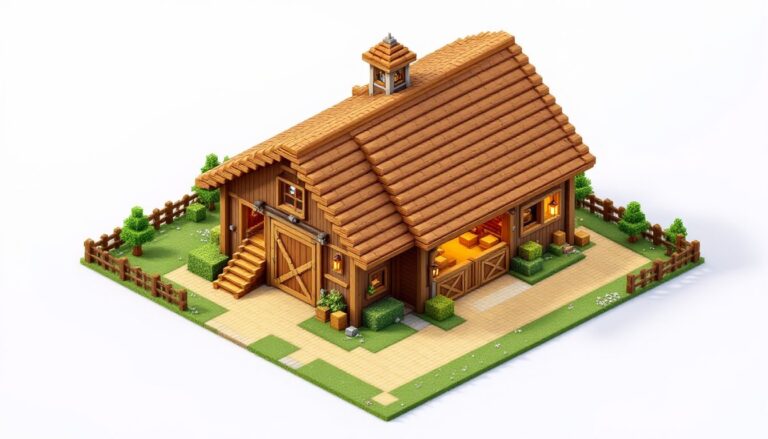
Consider interior lighting too. Dark dungeons need strategic torches: grand halls look majestic under lantern chandeliers (hanging groups of lanterns on chains made with chains and lanterns). If you’re working with resource packs or mods from Nexus Mods, custom textures can elevate your castle dramatically. A helpful reference like the Minecraft Wiki Guide covers building mechanics that inform advanced techniques. For barn builds within your castle grounds, perhaps a stable or storage structure, apply the same principles: varied materials, thoughtful depth, and lighting that makes the space feel inhabited and real.
Conclusion
Building a Minecraft castle is most successful when you follow a phased approach: lock down your design first, gather materials, build the structure, add defensive character, populate with functional rooms, then decorate obsessively. A solid stone foundation with wood accents, varied block palettes, and intentional lighting transforms a simple structure into an immersive fortress. Start building today, your next great Minecraft build is waiting.