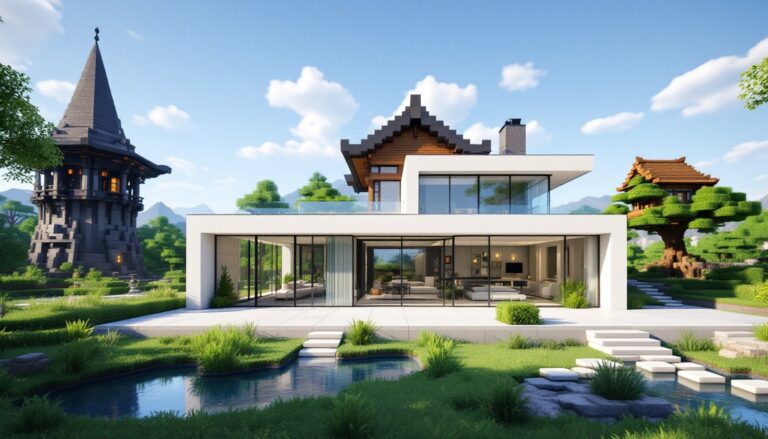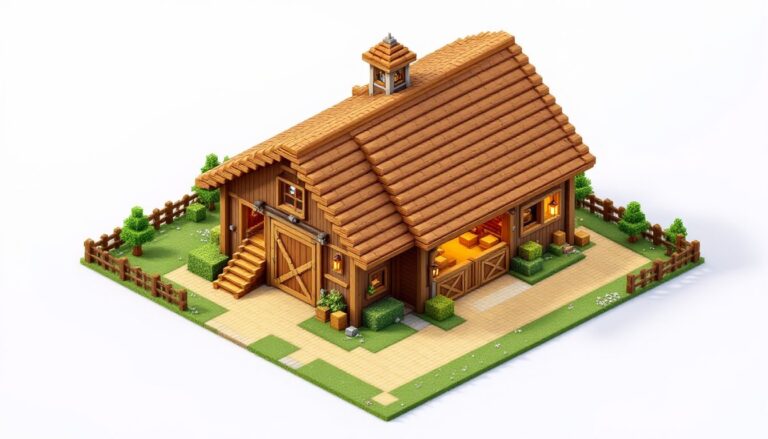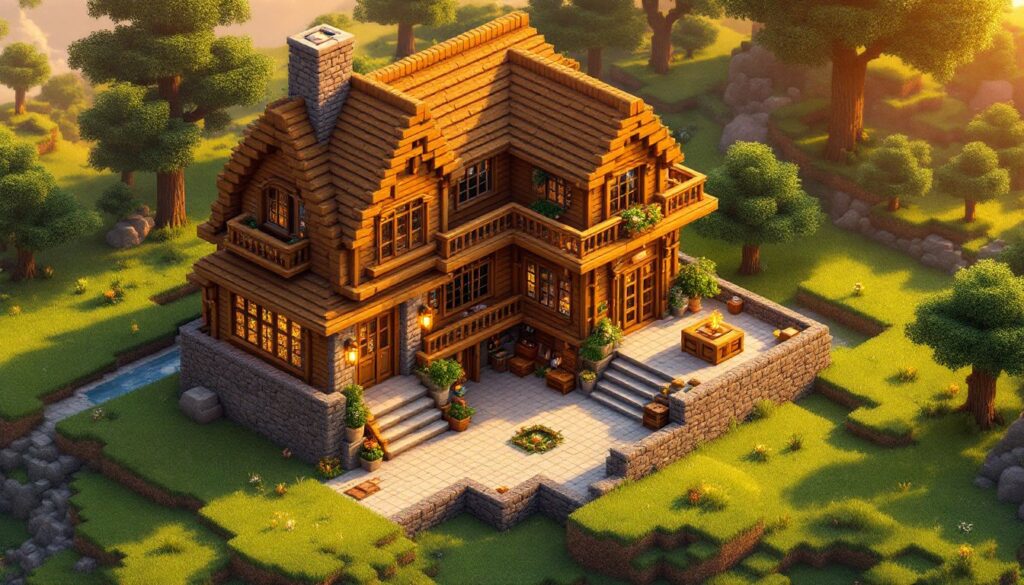
Building a solid Minecraft house is the foundation of any survival world. Whether you’re setting up your first shelter or planning an ambitious base, knowing what separates a functional home from a showstopper makes all the difference. A great Minecraft house protects you from mobs, supports your survival needs, storage, crafting, smelting, and sleeping, and gives you a hub to expand from. This guide covers the essentials: design principles, material choices, room layouts, architectural styles, and the quality-of-life features that transform a basic box into a base you’ll actually want to spend time in.
Table of Contents
ToggleKey Takeaways
- A great Minecraft house balances four core functions: keeping mobs out, supporting survival logistics, adapting to progression, and fitting its biome.
- Start your Minecraft house design from functionality—decide on layout and utility rooms first, then layer aesthetic details like varied rooflines, textures, and decorative elements.
- Choose a primary building material and stick with it for cohesion; wood offers warmth and versatility while stone variants provide durability and a medieval aesthetic.
- Organize storage and crafting zones strategically by grouping related items together and using labeled chests, barrels, or double chests for easy access during gameplay.
- Lighting is both functional and atmospheric; place torches, lanterns, or glowstone to prevent mob spawning while creating visual depth and ambiance.
- Add quality-of-life features like paths to important locations, perimeter fencing, nether portals, and small decorative touches to transform a functional base into a home you’re proud of.
What Makes a Great Minecraft House
A great Minecraft house does four things: it keeps mobs out, supports your survival essentials, adapts as you progress, and fits its biome. Think of it as functional art, it needs to work, but it should also reflect your style.
Safety comes first. Secure walls, a solid roof, a lockable door, and strategic lighting prevent creepers from turning your home into a crater. You’ll want at least 2-3 blocks of clearance around your perimeter with torches or lanterns to stop mob spawns. A bed inside ensures you set your respawn point and skip nights.
Second, plan for survival logistics. You need dedicated space for a crafting table, furnaces or smokers, storage chests, and easy access to your mining operations. Cramped bases feel suffocating, even a starter Minecraft house should be at least 5×5 to give you room to move and expand. As you progress, vertical expansion (basements for mining, upper floors for farms) keeps everything organized without eating up surface land.
Third, choose a biome that matches your goals. A forest biome offers abundant wood: plains give you space for farming and aesthetics: mountains provide building material and dramatic landscapes. Your location influences everything from available resources to the vibe of your builds.
Balancing Aesthetics With Functionality
The secret to a house that looks good and works well is simple: start from function, then layer detail. Decide your base’s purpose first, is this your main survival hub, a temporary starter shelter, or a specialized outpost for mining or farming? Main bases earn more investment in aesthetics and utility: starter houses can be minimal.
Place practical rooms first: storage area, crafting and smelting zone, enchanting room, bedroom. Once the layout is locked, add visual depth. Use varied rooflines, overhangs, and textured walls instead of flat surfaces. Stairs, slabs, fences, trapdoors, and even placed campfires (extinguished to look like logs) break up monotony and make your Minecraft house feel intentional, not slapped together.
Don’t underestimate small details. A path leading to your door, landscaping around the foundation, or a small courtyard yard transforms a box into a genuine dwelling. Lighting isn’t just functional, lanterns and glowstone placed thoughtfully set atmosphere.
Essential Building Materials and Blocks
Material choice defines your Minecraft house’s identity. Pick a primary material and stick with it for cohesion.
Wood is the classic choice for survival bases. Oak is versatile and warm: spruce works for colder, forested vibes: birch is bright and clean: dark oak gives a rustic, sturdy feel. Crimson and warped wood add accent color and fit nether-themed builds.
Stone variants, cobblestone, stone bricks, deepslate, and blackstone, are durable and medieval-looking. They pair well with wood for hybrid builds. Andesite, diorite, and granite add texture and prevent your walls from looking flat.
Glass panes are essential for windows. They let light in, let you see outside, and keep mobs out. Combine them with trapdoors or shutters for variety.
Lighting blocks matter early and often. Torches are basic but functional: lanterns look better as your builds get nicer: glowstone and sea lanterns work for modern or underwater aesthetics: shroomlights (from the nether) add a magical glow.
Utility blocks fill your rooms: crafting tables, furnaces, smokers (faster for food), blast furnaces (for ores), chests, double chests for storage, barrels (alternate storage), anvils for tool repair, enchanting tables surrounded by bookshelves (each bookshelf boosts enchantment power), brewing stands if you’re into potions.
Pick materials that feel right for your aesthetic. A medieval stone castle looks wrong with concrete: a modern base clashes with pure logs. Consistency makes the difference between a house and a real home.
Layout and Room Planning Strategies
Good layout is invisible, you don’t think about it, but a cramped base makes every task annoying. Start by sketching your footprint. A 5×5 room is tight but functional: 7×7 feels spacious: 10×10 gives you room to breathe and decorate.
Separate functional zones: an entry area with doors and floors to prevent tracking in dirt, a storage room (temperature-controlled if you care about organization), a crafting/smelting area with easy access to your furnace setup, a bedroom with your bed and maybe some personal touches, an enchanting room near your storage so you can grab supplies quickly, and farm areas either indoors or nearby for food production.
Vertical expansion is key to efficient use of space. A basement underneath your house lets you tunnel down to mines without abandoning your base. Upper floors become farms, storage annexes, or living quarters. Multiple levels connected by stairs or ladders keep everything accessible without sprawl.
Organizing Storage and Crafting Areas
Storage and crafting deserve prime real estate in your Minecraft house. Group related items together: all ores near your furnaces, all crops and seeds near your farm, all enchanted tools near your crafting table. This saves time when you’re in the middle of a project.
Label your chests or barrels so you remember what’s inside. Double chests give you double capacity and look intentional when placed side by side. Leave one-block gaps above chests so you can open them without obstacles blocking the lid. Barrels work well as alternates and can be stacked vertically to save floor space.
Create a sorting system early. Assign chests for raw materials (wood, stone, iron), crafted items (sticks, planks, bricks), food, and rare/valuable loot. A messy storage area frustrates you: an organized one makes survival feel manageable.
Architectural Styles and Design Inspiration
Your Minecraft house doesn’t have to be generic. Pick a style and commit to it.
Starter wooden huts are simple A-frame roofs with log walls, quick to build, functional, and charming in their simplicity. Perfect if you want to get playing fast.
Medieval builds use stone, wood, and archer towers. This style feels timeless and scales from small cottages to sprawling castles.
Modern bases lean into concrete, white dye, glass, and clean lines. They’re sleek and often feature glass walls, flat roofs, and integrated pools or patios. Players interested in contemporary aesthetics gravitate here.
Japanese-inspired houses feature pagoda-style roofs, cherry blossom trees, and natural landscaping. They’re visually striking and reward attention to detail.
Fantasy and magic themes use purpur blocks, amethyst, dark oak, and enchanting aesthetics. Nether-inspired designs incorporate crimson and warped wood.
Underwater bases use glass domes and work with prismarine, dark prismarine, and sea lanterns. They’re ambitious but visually unique.
Design guides often suggest choosing a specific plot (like a 10×10 foundation) before building. This constraint forces intentionality and prevents sprawl. Sketch your layout on paper or mentally walk through it, does traffic flow naturally? Are utility blocks convenient? Do decorative elements enhance rather than clutter?
You can find inspiration on community modding sites where builders share builds, or in YouTube’s vast library of Minecraft house tutorials. The key is understanding why a build works, not just copying it block-for-block.
Lighting, Defense, and Quality-of-Life Features
Lighting serves dual purposes: it stops mobs from spawning and creates atmosphere. Early on, torches everywhere will do. As you progress, upgrade to lanterns for visual polish or glowstone for a sleeker look. The rule is simple: no dark spots outside or inside your base where mobs can spawn.
Defense doesn’t mean building a fortress, but strategic choices help. Fences or walls create a perimeter: a moat around your base discourages mobs (water slows them). Secure doors (wooden or iron) prevent zombies from breaking in on hard difficulty. Perimeter lighting is your best defense, mobs can’t spawn in lit areas.
For dedicated defense setups, redstone contraptions using lava, pistons, and suffocation damage can eliminate mobs automatically. These are optional but satisfying if you’re into engineering.
Quality-of-life features make living in your Minecraft house enjoyable. A path from your door to important locations (farms, mines, neighboring bases) looks good and functions as a guide. A courtyard or plaza outside your base gives you breathing room. Animal pens keep livestock contained: crop fields (wheat, carrots, potatoes) provide food without constant effort. A nether portal inside or very close to your base saves you travel time.
Stairs connecting floors should be wide enough to navigate without getting stuck. Consider adding benches, cauldrons, or decorative plants inside to make rooms feel inhabited. Even small touches, a painting on a wall, a campfire for ambiance, transform a purely functional space into somewhere you want to be.
These aren’t necessities, but they’re the difference between a base you tolerate and a Minecraft house you’re proud of.