Your Minecraft house is far more than a cosmetic feature, it’s your survival lifeline, your logistics hub, and the foundation of every playthrough. Whether you’re grinding through early-game stone or constructing a sprawling mega-base, a well-designed house keeps you alive, organized, and ready for whatever the Overworld throws at you. This guide walks you through everything you need to know: why your shelter matters, how to gather the right materials, designing functional layouts, and nailing interior aesthetics. By the end, you’ll have the knowledge to build something that’s both practical and impressive.
Table of Contents
ToggleKey Takeaways
- A well-designed Minecraft house serves four critical functions: protection from mobs, organized storage, progression through crafting stations, and respawn point management via beds.
- Mix multiple block types like wood planks, stone variants, and decorative elements to add visual depth and prevent your Minecraft house from looking flat and lifeless.
- Plan functional zones before building by sketching out separate areas for storage, crafting, enchanting, bedrooms, and farming to maximize efficiency and minimize travel time.
- Vary roof heights and use peaked or multi-level ridge designs rather than flat roofs to create intentional, visually dynamic architecture.
- Dedicate organized spaces for essential utility blocks including furnaces, crafting tables, enchanting tables surrounded by 15+ bookshelves, and storage chests to streamline gameplay progression.
- Transform basic rooms into showcases by layering intentional decoration like item frames, potted plants, and strategic lighting while avoiding visual clutter.
Why Your Minecraft House Matters
Your Minecraft house serves four critical functions: protection, storage, progression, and respawning. When nightfall hits, hostile mobs, Creepers, Skeletons, Zombies, Endermen, flood the surface. A properly enclosed house with lit interiors keeps you safe while you’re AFK or organizing inventory. You’re not just dodging damage: you’re staying efficient.
Storage is the second pillar. Early-game adventures generate stacks of cobblestone, dirt, and random drops that clutter your inventory. Without a dedicated storage area, you’ll waste time dropping items or running back to ore deposits. A well-planned house includes dedicated chest rooms where you can sort and retrieve materials instantly.
Progression happens indoors. Your enchanting table, anvil, brewing stand, smithing table, and grindstone all require block space and organization. A house groups these workstations into a logical crafting hub, cutting travel time between activities by orders of magnitude.
Finally, beds set your spawn point. Dying in a ravine far from base means a brutal journey home. A bed in your house ensures you respawn near your resources, turning a death from catastrophic into merely inconvenient. Minecraft Villager House: Complete guides show how villagers themselves rely on proper housing, underlining how critical shelter is across all gameplay styles.
Essential Building Materials and Resources
Choosing the Right Block Palette
Structural blocks form your house’s skeleton. Wood planks (oak, spruce, birch, jungle) are the quickest early-game option and pair well with stone variants. Stone, cobblestone, stone bricks, and andesite offer durability and visual depth when mixed together. Bricks and polished blackstone add refinement to mid-to-late-game builds. Don’t pick just one material, layering different blocks prevents your house from looking flat and lifeless.
Texture variety matters. A wall of pure cobblestone bores the eye. Swap in stone, stone bricks, and andesite in a repeating pattern, and suddenly you’ve got visual interest. Similarly, combine wood types: oak logs with dark oak planks or spruce creates contrast without clashing.
Glass panes (not glass blocks) should be your window standard. Panes connect seamlessly and allow light in without breaking sightlines. Use them to frame views of your landscape or highlight crafting areas.
Decorative blocks multiply your options exponentially. Trapdoors serve as both doors and detailing. Fences, walls, and stairs break up flat surfaces. Lanterns, soul lanterns, and shriekers double as lighting and aesthetic anchors. Potted plants, flower pots, and hanging flowers soften hard edges. Leaves, when placed carefully, can create overgrown charm or roofing texture. According to building ideas and tips sources, texture layering separates amateur builds from polished designs.
Utility blocks are non-negotiable. You need a furnace or blast furnace for smelting, a crafting table, multiple chests or shulker boxes for storage, and dedicated space for your enchanting table and anvil. Add a brewing stand, loom, stonecutter, and smithing table once you’re established. These aren’t optional, they’re progression checkpoints.
Designing Your Minecraft House Layout
Popular House Styles and Architectures
Layout planning trumps aesthetics. Before placing a single block, sketch out zones: entry/foyer, main storage room, crafting/smelting area, enchanting chamber, bedroom, farming hub, and portal room (if you’re planning Nether access). Assign each zone a height and footprint. A three-story tower works for tight bases: a sprawling farmhouse spreads vertically. The choice depends on your terrain and play style.
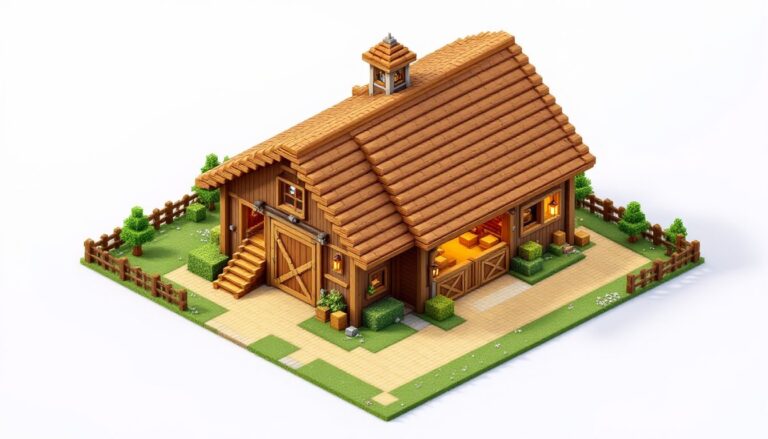
Roof design makes or breaks your house’s silhouette. Flat roofs feel boring and incomplete. Peaked roofs, multi-level ridges, and varied heights add dynamism. If your main roof peaks at Y-level 15, raise a tower’s roof to 18 or drop a side wing to 12. This variation, in both height and angle, signals intentional design.
Survival bases often integrate functionality into visible architecture. A tall storage tower with alternating oak and dark oak wood planks isn’t just storage: it’s a landmark. A dedicated farming courtyard surrounded by fences and lanterns doubles as both crop production and aesthetic focal point. A Nether portal room with obsidian frames and decorative nether brick becomes a natural transition zone between dimensions.
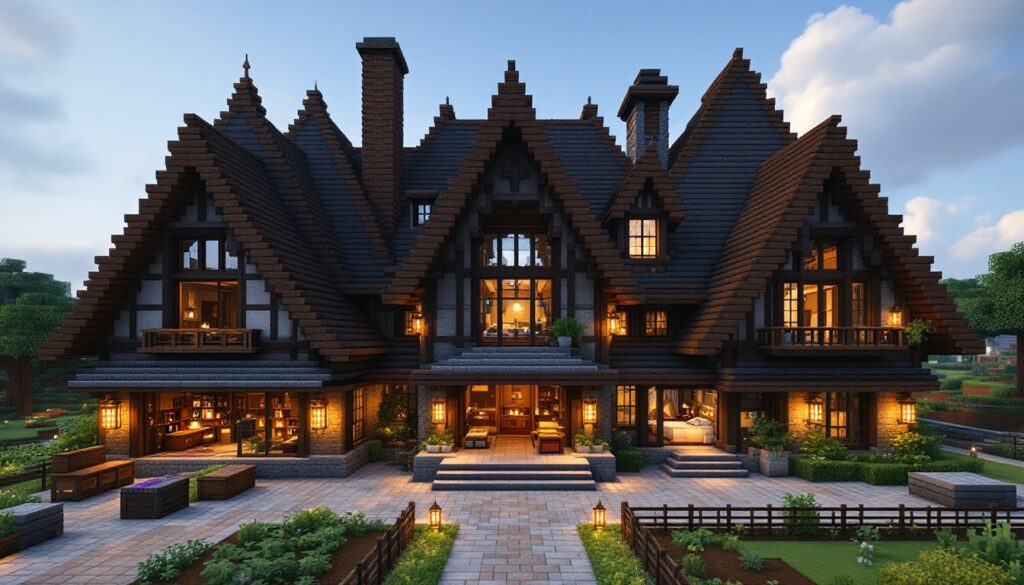
Medieval and cottage styles remain popular because they’re forgiving. Dark oak and spruce wood logs with stone or andesite create authentic medieval cottages. Add a thatch roof (using dark oak stairs and leaves), trapdoor doors, and small windows, and you’re done. Multi-story variations, especially towers or fortified designs, scale this aesthetic upward without losing charm.
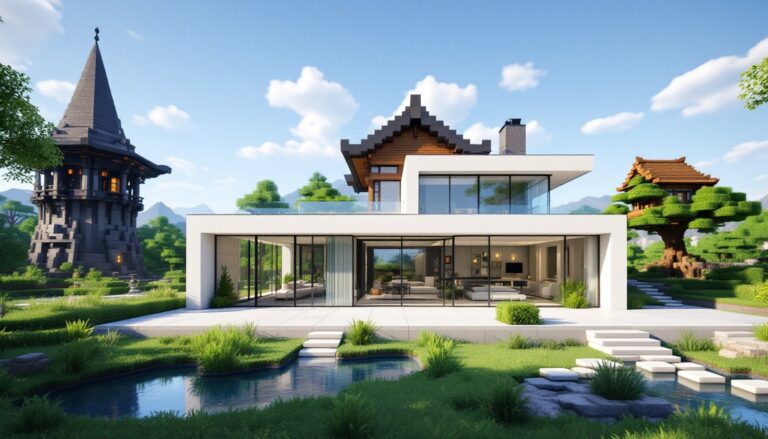
Modern builds prioritize clean lines and negative space. Polished andesite, white concrete, glass panes, and smooth stone dominate. Roofs flatten or slope gently. Interior lighting plays a leading role: modern designs highlight vertical light strips using lanterns in walls.
How to Build a Minecraft Church: Complete Design Guide covers specialized architecture that applies here: planning sight lines, breaking up symmetry, and using rooflines as guides all enhance any house style.
Interior Design and Functionality
Interior organization separates casual bases from efficient ones. Dedicate one full room (or floor in a tower) to storage. Line walls with double chests in neat rows. Label sections: ores in one corner, wood in another, food nearby. This takes discipline but saves countless hours of searching. Use shulker boxes to further organize items within chests.
Crafting and smelting deserve their own zones. A crafting table, furnace, blast furnace, and smoker clustered together let you process materials without running across your base. Add a grindstone and anvil nearby for repair and enchantment tweaking. Vertical space matters, stack furnaces in tall chambers to avoid sprawl.
Your enchanting table should be centered in a dedicated room. Surround it with bookshelves (at least 15 for max enchantment levels). Light it well with soul lanterns or lanterns to match your house’s aesthetic. This isn’t just functional: it’s a power hub that warrants visual prominence.
Bedrooms don’t need to be large. A small chamber with a bed, couple of chests, and cozy detailing suffices. Minecraft Bed Ideas: 50+ Creative Designs offers inspiration beyond basic placements, canopies, decorative posts, and ambient lighting transform mundane sleeping quarters into sanctuaries.
Kitchens and dining areas add roleplay flavor. A furnace or smoker with a composter and food storage chest create a functional kitchen. A crafting table doubles as a prep station. Add lanterns, potted plants, and careful detail work, and you’ve got an inviting space. 30+ Minecraft Kitchen Ideas demonstrates how lighting, block choice, and small accents elevate kitchens from utility to showpiece.
Farming hubs integrate with your house via dedicated rooms or exterior courtyards. Water channels, dirt blocks, composters, and hoppers automate harvesting. Enclose the area with fences and add lantern lighting for ambiance and practical visibility.
Decoration ties rooms together. Bookshelves, item frames, paintings, cauldrons, brewing stands as decor, and potted plants fill negative space. Use stairs and slabs to create depth on walls and floors. Avoid clutter, intentional sparse decoration reads better than overcrowding.
Conclusion
Building a functional Minecraft house boils down to four principles: protection from mobs, organized storage and crafting, intentional layout planning, and thoughtful decoration. Mix your block palette, vary roof heights, and separate functional zones into dedicated rooms. Whether you’re building a cozy cottage, a medieval fortress, or a sprawling mega-base, these fundamentals apply across all styles. Start small, iterate on designs, and don’t fear rebuilding as your skills improve. Your house is your foundation, make it count. Check out gaming guides for inspiration and detailed game coverage to stay updated on new blocks and building trends as future updates roll out.