Leveling up in Minecraft isn’t just satisfying, it’s essential. Whether you’re enchanting diamond gear, repairing your elytra, or naming every mob in sight, you need XP. The grind can be brutal if you’re punching creepers one at a time, but the right XP farm turns the trickle into a flood. In 2026, with Minecraft’s evolution across Java Edition 1.21 and Bedrock Edition 1.21, farm designs have been refined to near-perfection. This guide breaks down the best XP farm setups, walks through building one from scratch, and covers the nitty-gritty differences between editions so players can maximize efficiency without wasting hours on outdated designs.
Table of Contents
ToggleKey Takeaways
- A Minecraft XP farm is essential for late-game activities like enchanting, repairing gear, and naming mobs, as the exponential XP curve demands consistent, high-output farming beyond level 30.
- Enderman farms offer the fastest XP rates (100–200 levels per hour) for late-game players, while mob spawner farms provide an accessible early-game entry point at 60–100 levels per hour.
- Manual farms always outperform automatic farms for pure XP grinding because XP only drops when players deliver the killing blow, making active participation non-negotiable for maximum efficiency.
- Proper spawn-proofing of nearby caves and biomes within 128 blocks (Java) or simulation distance (Bedrock) is critical—even one unlit cave can cripple farm rates significantly.
- Java Edition 1.21 and Bedrock Edition 1.21 differ in spawn mechanics, mob behavior, and redstone logic, requiring edition-specific farm designs to avoid wasted construction efforts.
- Optimal fall distances (22–23 blocks) and precise water flow are essential to prevent mobs from dying too early or surviving with too much health, which directly impacts XP farm efficiency.
Why XP Farming Matters in Minecraft
XP isn’t just a number that ticks up when mobs die. It’s the currency for some of the most critical activities in the game, and running out at the wrong moment can derail entire projects.
How XP Works in Minecraft
Experience points drop from several sources: killing mobs, mining certain ores (coal, diamond, emerald, lapis, redstone, nether quartz), smelting items, breeding animals, fishing, and trading with villagers. Each activity awards different amounts, but mob kills remain the most reliable and scalable source.
XP is stored in the player’s experience bar and accumulates into levels. Early levels require minimal XP, just 7 points to reach level 1, but the cost scales significantly. Reaching level 30 requires 1,395 total XP, while hitting level 100 demands over 17,000. The exponential curve means players need consistent, high-output farms for late-game goals.
What You Can Do with Experience Points
The most obvious use is enchanting. Enchantment tables require lapis lazuli and XP levels, with the best enchantments (Protection IV, Sharpness V, Fortune III) demanding level 30 or higher. But that’s not all:
- Anvil repairs and combining: Fixing gear or merging enchanted books costs XP, and the price increases with each repair on the same item.
- Naming items and mobs: Name tags require an anvil and XP levels, essential for keeping pets or marking special mobs.
- Enchanted book merging: Creating god-tier gear means combining multiple enchantments, racking up XP costs quickly.
Without a steady XP source, players either grind inefficiently or avoid these activities altogether. That’s where farms come in.
Top XP Farm Designs for Maximum Efficiency
Not all XP farms are created equal. Some suit early game survival, others require end-game resources. Here’s the breakdown of the best xp farm minecraft designs ranked by efficiency, resource cost, and ease of construction.
Mob Spawner XP Farms
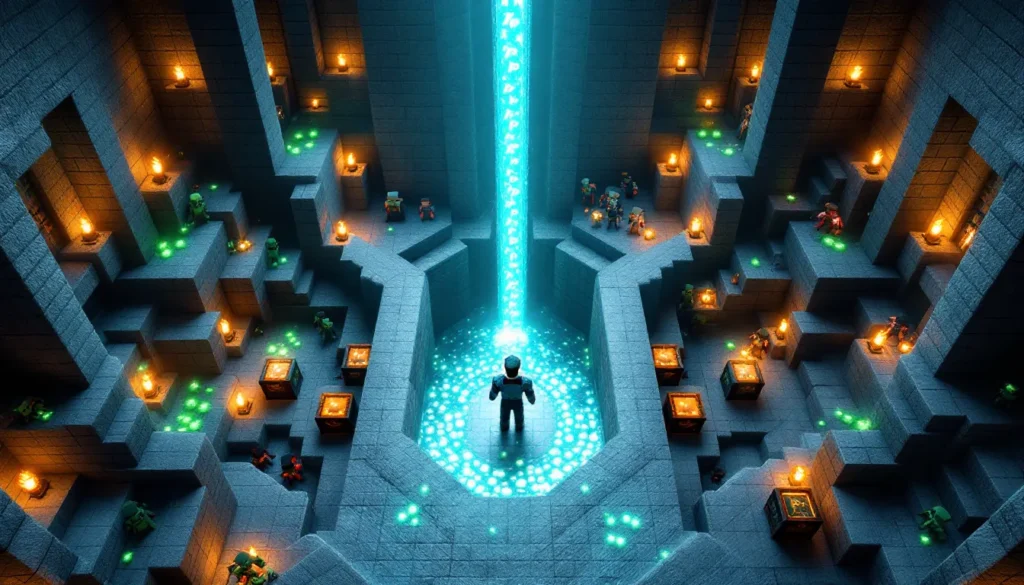
Mob spawners are the gateway drug to XP farming. Found in dungeons, mineshafts, and strongholds, these caged blocks spawn zombies, skeletons, or spiders infinitely. The farm design is straightforward: channel mobs into a kill chamber using water streams, weaken them with fall damage, then one-punch them for XP.
Pros: Simple build, accessible in early to mid-game, no complex redstone.
Cons: Limited to one mob type, slower spawn rates compared to larger farms, requires locating a spawner.
XP Rate: Around 60-100 levels per hour depending on spawner type and efficiency.
Enderman XP Farms
Built in the End dimension, Enderman farms exploit the abundance of endermen on outer islands. Players create a platform where endermen spawn, then use trapdoors and leaves to manipulate their hitboxes, funneling them into a single kill spot.
Pros: Extremely high XP rates (up to 30 levels in under 10 minutes), also generates ender pearls.
Cons: Requires beating the Ender Dragon first, construction in the End is resource-intensive, dangerous during setup.
XP Rate: 100-200 levels per hour, arguably the best overall farm for late game.
Guardian Farms
Ocean monuments house guardians, and draining these structures unlocks one of the most lucrative farms. Guardians spawn in and around drained monuments, and players can funnel them into a kill chamber using bubble columns or minecart systems.
Pros: Absurd XP rates, drops prismarine shards/crystals for building, also yields raw cod.
Cons: Draining an ocean monument is tedious and resource-heavy (sponges, sand, or TNT required), guardian laser attacks are dangerous during construction.
XP Rate: 150-250 levels per hour once operational.
Blaze Farms
Nether fortresses contain blaze spawners, and these fiery mobs drop blaze rods essential for brewing and crafting. A blaze farm channels them into a kill chamber, often using flowing lava or pistons to weaken them.
Pros: High XP output, blaze rods are mandatory for late-game progression, relatively compact design.
Cons: Nether fortress locations vary wildly, blazes deal significant fire damage, requires fire resistance potions during construction.
XP Rate: 80-120 levels per hour.
Creeper Farms
Building a farm that spawns only creepers requires precise light levels and mob-proofing. Players typically construct these in mushroom biomes to prevent other hostile mobs from spawning, then use cats to scare creepers into a collection point.
Pros: Drops gunpowder for TNT and fireworks, creepers don’t attack if properly designed.
Cons: Lower XP rates compared to other farms, requires a mushroom biome or extensive spawn-proofing, cat placement is finicky.
XP Rate: 50-80 levels per hour.
Gold Farms (Piglin)
Zombified piglins spawn in the Nether’s wastes and crimson forests, and players exploit this by building gold farms above the Nether roof (Java Edition) or using portal-based designs (Bedrock Edition). These farms generate massive XP alongside gold nuggets, which smelt into ingots for trading and crafting.
Pros: Incredible XP and gold output, scales well with additional portals, relatively safe once built.
Cons: Requires Nether roof access (Java only) or complex portal linking (Bedrock), initial setup is resource-intensive.
XP Rate: 100-180 levels per hour depending on design and edition.
Building Your First XP Farm: Step-by-Step Guide
Starting an XP farm from scratch can feel overwhelming, but a simple mob spawner farm is both effective and beginner-friendly. Here’s how to build one.
Materials You’ll Need
Gather these before starting:
- Water buckets (at least 4)
- Building blocks (cobblestone, stone bricks, or any solid block, around 200 blocks)
- Hoppers (4-6 for item collection)
- Chests (2-4 for storage)
- Torches (stack of 64 for lighting)
- Trapdoors or signs (8-12 to control water flow)
- Optional: Redstone components (buttons, pressure plates, or pistons for automation)
Choosing the Right Location
Locate a dungeon spawner using one of these methods:
- Cave exploration: Dungeons generate underground, often connected to cave systems. Listen for multiple mobs groaning in one spot.
- Chunk-based searching: Dungeons favor certain biomes (plains, forests, taigas). Dig methodically at Y-levels 20-40.
- Seed maps or tools: Use external resources like Chunkbase (input your seed) to pinpoint dungeon coordinates.
Once found, clear the area around the spawner without breaking it. Light the spawner temporarily with torches to prevent mob buildup during construction.
Construction Process
- Dig the collection chamber: Excavate a 9×9 area around the spawner, extending 3-4 blocks down. This creates space for mobs to spawn and fall.
- Create water channels: Place water sources at the corners of the chamber (or use a central cross pattern) to push mobs toward a central drop shaft. Use signs or trapdoors to prevent water from flowing where you don’t want it.
- Build the drop shaft: Dig a 2×2 hole in the center where water converges, extending it down 20-23 blocks. This fall distance reduces mobs to half a heart, allowing one-punch kills. For zombies and skeletons, 23 blocks is ideal: spiders require adjustments due to their hitbox.
- Construct the kill chamber: At the bottom of the shaft, build a 2-block-tall chamber where players stand. Install a hopper system beneath the chamber to collect drops, feeding into chests.
- Remove spawner torches: Once construction is complete, remove torches from the spawner and surrounding area. Mobs will begin spawning and flowing into your farm.
- Test and tweak: Stand in the kill chamber and wait. If mobs aren’t flowing properly, adjust water streams or check for lighting errors.
This basic design works for any spawner type and scales with minor modifications. For skeleton spawners, some players automate iron collection separately, but the XP output remains consistent.
Automatic vs Manual XP Farms: Which Is Better?
Players debate this constantly, and the answer depends on goals.
Pros and Cons of Automatic Farms
Automatic farms kill mobs without player input, typically using lava blades, campfires, or entity cramming. Drops and XP (if using furnaces or other indirect XP sources) accumulate passively.
Pros:
- Zero player interaction required: can AFK safely
- Generates resources (rotten flesh, bones, arrows) continuously
- Ideal for item farming rather than pure XP
Cons:
- XP doesn’t drop automatically. Mobs must be killed by a player to grant XP, so fully automatic farms only work if you’re smelting the drops later (smelt cactus, kelp, etc., for indirect XP).
- Lower XP efficiency compared to manual farms
- More complex redstone and mechanics
Pros and Cons of Manual Farms
Manual farms weaken mobs but leave the final blow to the player, ensuring XP drops.
Pros:
- Maximum XP per mob killed
- Simpler designs, fewer resources
- Works with all mob types
Cons:
- Requires active participation: can’t AFK without a looting mechanism
- Repetitive clicking (though the Minecraft modding scene offers automation mods for those interested)
Verdict: For pure XP grinding, manual farms win. For passive resource generation, automatic farms are better.
Early Game vs Late Game XP Farming Strategies
The best XP source shifts dramatically as players progress.
Best Early Game XP Sources
Before establishing megafarms, players rely on:
- Mob spawner farms: The first reliable XP source, accessible once a dungeon is located.
- Coal and iron ore mining: Mining coal grants 0-2 XP per block, and iron (with Fortune) adds up quickly.
- Smelting: Cooking food or ores in furnaces generates XP. Smelting a stack of iron ore grants around 10-15 XP, not huge but steady.
- Animal breeding: Cows, pigs, and sheep grant 1-7 XP per breeding cycle. Not efficient long-term but useful early on.
- Fishing: Grants 1-6 XP per catch. Tedious but requires zero infrastructure.
These methods won’t push players to level 100 fast, but they bridge the gap until better farms are available.
Advanced Late Game XP Farms
Once the Ender Dragon is defeated and resources are plentiful:
- Enderman farms dominate for raw XP speed. Building one on an outer End island is the gold standard.
- Guardian farms offer similar rates with bonus resources, ideal for players who enjoy underwater builds.
- Gold farms (zombified piglin) scale infinitely and produce ridiculous XP alongside gold for trading.
- Raid farms: Villages can trigger raids, and killing pillagers grants XP. Not as efficient as dedicated farms but useful for totems of undying.
By late game, players often maintain multiple farms for different purposes: XP, resources, and automation.
Common XP Farm Mistakes to Avoid
Even experienced builders screw up farm construction. Here are the pitfalls.
Poor Mob Spawning Conditions
Mobs require specific conditions to spawn:
- Light level 0 in Java Edition, light level 7 or lower in Bedrock Edition for hostile mobs (excluding specific biome rules).
- Spawning spaces must be solid blocks (mobs won’t spawn on slabs, glass, or transparent blocks).
- Mob cap issues: Minecraft limits the number of mobs in loaded chunks. If caves nearby are filled with mobs, your farm suffers. Light up or slab over surrounding areas within 128 blocks (Java) or simulation distance (Bedrock).
Players often forget to spawn-proof nearby caves, wondering why their farm produces nothing. According to detailed spawn mechanics analysis, even a single unlit cave can cripple farm rates.
Inefficient Farm Design
Common design errors include:
- Wrong fall distance: Mobs need exactly 22-23 blocks to drop to half a heart. One block off and they either die (no XP) or require multiple hits (slower kills).
- Water flow mistakes: Mobs stuck in corners or water streams that don’t converge properly waste spawn cycles.
- Inadequate collection systems: Hoppers clog if chests fill up: use multiple chests or item filters.
- AFK spot placement: Standing too close to the farm prevents spawns: too far and chunks unload. The sweet spot is 24-32 blocks from the spawn area in Java, adjusted for simulation distance in Bedrock.
Optimizing Your XP Farm for Peak Performance
Squeezing maximum efficiency requires tuning.
Lighting and Spawn Rate Optimization
Spawn rates hinge on controlling where mobs can’t spawn:
- Spawn-proof everything nearby: Light up caves, place slabs on surfaces, or fill in areas within 128 blocks (Java) or your simulation distance (Bedrock). This forces all spawns into your farm.
- Use slabs and transparent blocks in farm construction to prevent unwanted spawns inside the structure.
- Mushroom biomes eliminate hostile mob spawns entirely, making them ideal for specific farm types (creeper farms, for example).
In Java Edition, players often build farms in ocean biomes since there are fewer spawnable spaces. Bedrock players should prioritize biomes with flat terrain to minimize spawn competition.
AFK-Friendly Farm Setups
For extended grinding sessions:
- Auto-clickers or weighted keys: While controversial (and against some server rules), single-player users often automate attacks using hardware or software solutions.
- Redstone kill switches: Design farms with a button or lever that activates pistons or other kill mechanisms, allowing semi-automation.
- Mending gear: Equip mending-enchanted items so collected XP repairs gear automatically, extending AFK sessions.
- Mob switches (Java Edition): Advanced players use named shulkers or other persistent mobs to control the mob cap, ensuring farm efficiency even when AFK.
Many advanced farm guides recommend chunk alignment and precise positioning to maximize AFK safety and XP output.
XP Farm Differences Between Java and Bedrock Edition
Java Edition 1.21 and Bedrock Edition 1.21 share core mechanics but diverge in critical ways that affect farm design.
Spawn mechanics: Java requires light level 0 for hostile mob spawns: Bedrock allows spawns up to light level 7. This means Bedrock farms need more thorough lighting control.
Mob behavior: Endermen in Java are easier to manipulate with trapdoors: Bedrock endermen behave slightly differently, requiring adjusted farm designs. Similarly, zombified piglins spawn more predictably on the Nether roof in Java, whereas Bedrock lacks Nether roof access, forcing portal-based gold farm designs.
Redstone differences: Quasi-connectivity (a Java feature) doesn’t exist in Bedrock, affecting piston-based farms. Bedrock players must use alternative redstone logic for certain automation.
Mob caps: Java calculates mob caps per player and chunk: Bedrock uses simulation distance and has a global mob cap, meaning farms perform differently in multiplayer.
Guardian farms: Bedrock guardians spawn more aggressively in and around monuments, sometimes making farms more efficient than Java counterparts.
Players should always verify farm designs match their edition. A farm tutorial for Java won’t necessarily work in Bedrock without modifications, and vice versa.
Conclusion
XP farming isn’t just about hitting level 30 for enchantments. It’s about creating a self-sustaining loop where gear stays repaired, enchantments stay stacked, and progression never stalls. Whether building a simple spawner farm in the first week or constructing an enderman slaughter factory after defeating the dragon, the right farm makes all the difference. The best xp farm minecraft setups in 2026 balance efficiency, resource cost, and edition-specific mechanics. Pick a design that fits current progression, avoid the common mistakes, and enjoy watching those XP orbs flood in. The grind doesn’t have to feel like a grind when the farm does the heavy lifting.