Building in Minecraft sounds simple at first: stack blocks and call it done. But veterans know that real Minecraft building separates the forgettable from the unforgettable. A well-executed Minecraft build combines thoughtful planning, smart material choices, and proven design principles that transform a pile of blocks into something that makes other players stop and stare. Whether you’re crafting a survival house, a towering structure, or something more ambitious, understanding the fundamentals of minecraft building will elevate every project. This guide covers everything from foundational techniques to advanced methods that experienced players use to create masterpieces.
Table of Contents
ToggleKey Takeaways
- Master Minecraft building by starting with roof design first—this foundational approach naturally encourages varied heights and prevents flat, boring silhouettes that undermine otherwise solid structures.
- Build a strategic block palette using contrasting colors and textures rather than single-block construction; pairing dark logs with light planks and mixing stone variants creates visual depth and memorable designs.
- Create distinctive silhouettes and break up flat surfaces through depth techniques like roof overhangs, recessed doors, outer pillars, and non-solid blocks such as glass panes and stairs.
- Advanced Minecraft building separates good builders from great ones through complex roofs with mixed slopes, smooth curves using stairs and slabs, and consistent diagonal patterns.
- Transform your structures into masterpieces by integrating detailing elements like trapdoors as shutters, flower boxes, and fences as support beams, then terraforming the surrounding environment with paths and landscaping.
- Whether building a survival house, tower, or village upgrade, these proven design principles consistently elevate projects from forgettable to unforgettable.
Essential Building Fundamentals Every Creator Should Know
Every strong build starts with a strong plan. Before placing a single block vertically, mark out your layout on the ground using a center point and outline your structure with simple shapes, rectangles for main buildings, circles for towers. Most structures in Minecraft boil down to combinations of these two shapes.
Start with the roof, not the walls. This might feel backwards, but rooflines set the tone for everything below. Building roofs first encourages naturally varied heights and prevents the flat, boring silhouette that kills otherwise decent builds. Mix 45-degree diagonal lines (one block at a time) with steeper diagonals (two to three blocks at a time) and combine them into curves, especially for roofs and towers. This variation is what catches the eye.
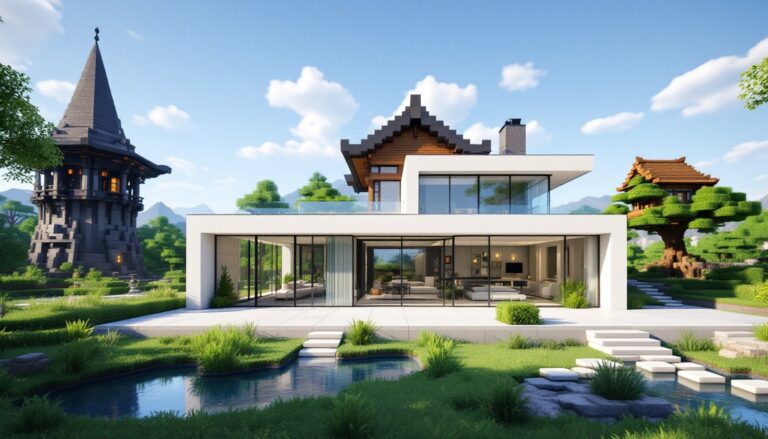
Think in terms of overall shape and silhouette. The strongest builds have interesting outlines when viewed from a distance. Use L-shapes or T-shaped footprints rather than plain rectangles. Add towers at corners or as accent pieces. Avoid monotony by breaking up flat walls with depth, roof overhangs, recessed doors, and pillars all accomplish this. The goal is a structure that reads clearly from any angle.
Choosing The Right Blocks And Materials For Your Projects
The most common beginner mistake is building an entire structure from a single block type. An oak plank house might seem cohesive, but it reads as flat and lifeless. Contrast is your friend.
Build a block palette with intentional contrast. Pair dark logs with light planks. Combine cobblestone, stone bricks, and andesite for walls. Medieval builds thrive on stone, bricks, and dark wood with mossy variants. Modern structures benefit from concrete, glass panes, and smooth stone. Rustic or natural builds should lean into stripped logs, varied planks, leaves, mossy blocks, and vines. The key is mixing blocks of similar color but different textures.
Use non-solid blocks to add depth. Replace some solid walls with glass panes instead of glass blocks, they look cleaner and allow more light. Stairs, slabs, walls, and trapdoors smooth transitions and add relief to otherwise flat surfaces. These aren’t afterthoughts: they’re structural choices that define your build’s character. A minecraft glass strategy can transform windows from simple holes into detailed frames that elevate the whole structure.
Design Principles That Transform Your Structures Into Masterpieces
Silhouette and shape define how a build reads from a distance. Use towers (circles) as natural focal points, they typically become the tallest parts of your structure. Pair them with varied roof heights across connected sections. An L-shaped or offset footprint inherently looks more interesting than a flat rectangle.
Depth prevents the dreaded flatness. Roof overhangs, recessed doors set back from the wall surface, and outer pillars all break up monotonous facades. Put doors slightly inside the wall rather than flush with it. Add stair-framed windows instead of simple square openings. This layering makes a structure feel solid and lived-in.
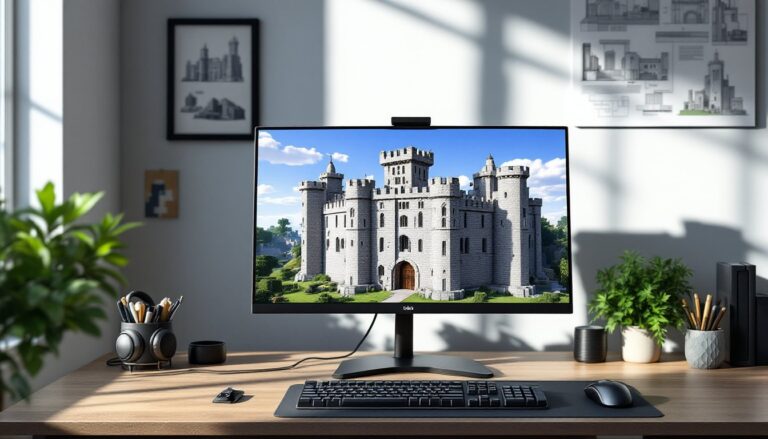
Texture and color work together. Use gradients from dark to light, or rough to smooth. Avoid placing the same block next to itself repeatedly: mix in variants. Detailing is where builds become memorable, trapdoors as shutters, buttons as decorative elements, flower boxes under windows, fences as support beams, balconies, dormers. Finally, integrate your build into the environment. Terraform the surroundings, add paths, bushes, trees, ponds, and landscaping. A great structure sits in a thoughtfully designed world, not floating in empty space. This principle applies whether you’re designing a minecraft castle or a humble cottage.
Advanced Building Techniques For Experienced Players
Complex roofs and curves separate good builders from great ones. Build a profile from one side using mixed slopes (one-block, two-block, and three-block steps) to form smooth curves. Fill the roof by following your outline carefully, always preserving the silhouette when viewed from the front. Use stairs, slabs, trapdoors, glass panes, and walls to smooth sharp transitions in roof lines.
Diagonal builds require consistency. Use a pattern like 1:1 or 2:1 steps, then refine with walls and glass panes for genuinely smooth diagonals. Block replacement for depth is subtler but effective, replace some solid blocks with non-solid variants (fences, walls, slabs) or mossy and ruined block variants to add age and weathering.
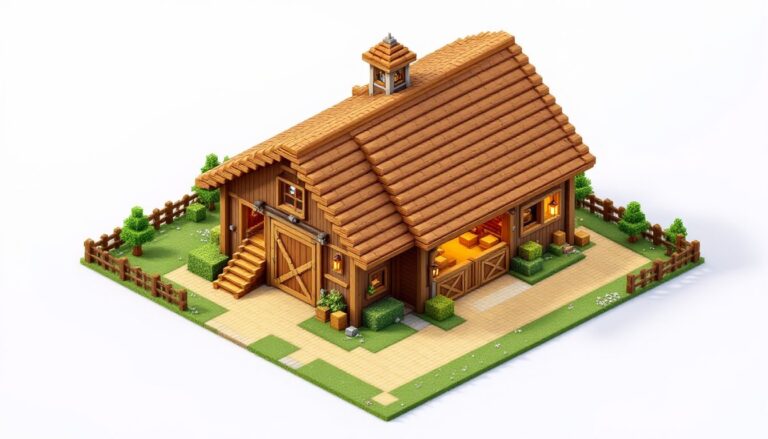
Circles and towers demand planning. Use simple pixel art circles or external tools to outline curved structures. Ensure the top view remains circular while the side view stays true to your chosen curve. When building a minecraft barn, experienced players use cylindrical grain silos as accent features, combining these techniques with mixed wood textures to create depth. These methods scale from small details to entire structure designs and compound as players refine their palettes and technique.
Building Popular Structures: Step-By-Step Strategies
Survival House
Start with a footprint, a rectangle or L-shape works well. Add a small circle at one corner for a tower accent. Decide your roof type (gable, hip, or multi-level) and build it first, varying heights between sections. Use mixed blocks for walls: oak planks paired with stripped logs and a cobblestone base creates visual interest. Add 2×1 windows and a recessed front door.
Depth comes next. Add roof overhangs, outer pillars at corners, stair trim at the base, and window frames. Small details matter: flower boxes, shutters, fence supports, and surrounding landscaping (paths, crops, small gardens) complete the build.
Tower
Outline a circle using a circle guide. Build vertical walls with varied textures, stone brick, cobble, andesite mixed together prevent monotony. Add crenellations or a curved cone roof at the top using multiple slopes and smoothing techniques. Include a spiral staircase or ladder inside, with floors every three to four blocks for both function and visual breaks.
Village House Upgrade
Keep the existing footprint but add depth with roof overhangs and outer supports. Replace simple walls with mixed textures and recessed windows using panes. Connect to village paths, add small farms and foliage around the structure. The minecraft build process here focuses on enhancement, taking what exists and adding layers of detail that make it shine.
Conclusion
Mastering Minecraft building starts with fundamentals: plan with simple shapes, build roofs first, and think in terms of silhouette and depth. Choose block palettes with contrast, use varied textures, and embrace non-solid blocks for visual interest. Apply consistent design principles around shape, depth, texture, and detailing. As you gain experience, tackle advanced techniques, complex curves, diagonal patterns, and thoughtful landscaping integration. These principles work whether you’re building a survival shelter, a floating island, or a massive creative project. The building community on platforms like Nexus Mods shares countless examples and tools to inspire your next creation. Keep experimenting, refine your style, and remember that every master builder started by stacking their first block.