Iron is the currency of mid-game Minecraft. Anvils, hoppers, rails, buckets, beacons, full sets of gear, every progression milestone bleeds ingots. Mining it by hand gets old fast, which is why an iron farm minecraft setup remains one of the most valuable builds in the game. With the changes to villager mechanics in 1.20+ still holding steady into 2026, the fundamentals have settled, and a well-designed farm can pump out 300+ ingots per hour with almost zero upkeep. Here’s how to build one that actually works.
Table of Contents
ToggleKey Takeaways
- An iron farm minecraft setup exploits villager panic behavior triggered by nearby zombies to automatically spawn and collect Iron Golems, producing 300+ ingots per hour with minimal upkeep.
- Successful iron farms require three core conditions: at least 3 villagers linked to beds and a workstation, a visible but unreachable zombie trigger, and a valid spawn area within a 16x16x6 box around the village center.
- Key materials include 3 villagers, 1 zombie, 3 beds, a composter workstation, glass blocks for pods, hoppers, and either lava or campfires for the kill chamber—gather everything before building to maintain momentum.
- Build your iron farm at least 64 blocks from existing villages to avoid spawn mechanic interference and ensure consistent golem generation.
- Popular designs like Ianxofour’s compact 3-villager farm (340 ingots/hour) for Java and Silentwhisperer’s portable design (250 ingots/hour) for Bedrock offer version-specific optimization with different footprints and performance rates.
- Common farm failures stem from incorrect spawn platforms, poor zombie visibility, improper lighting, or insufficient villager count—use the troubleshooting checklist to diagnose and fix issues quickly.
How Iron Farms Work in Minecraft
Iron farms exploit a specific villager behavior: when a villager detects a hostile mob (usually a zombie) within 16 blocks, it panics and tries to summon an Iron Golem for protection. Spawn that golem in a controlled space, kill it, collect the ingots. Repeat forever.
The core requirements haven’t changed much since the Village & Pillage update reworked the system:
- At least 3 villagers linked to beds and a workstation, so the game registers a village.
- A nearby zombie (or zombie villager) the villagers can see but not reach.
- A valid spawn area for the golem within a 16x16x6 box around the village center.
Get those three conditions right and the farm runs itself. Get one wrong and players end up staring at an empty hopper for an hour.
Materials and Resources You’ll Need Before Building
Before laying the first block, gather everything. Nothing kills momentum like sprinting back to a base for more glass at block 47.
Shopping list for a basic farm:
- 3 villagers (unemployed, transported via boat or minecart)
- 1 zombie in a minecart or trapped behind glass
- 3 beds (any color)
- 1 workstation block (composter is cheapest)
- ~64 building blocks (cobble, stone, or anything non-flammable)
- 20+ glass blocks for villager pods
- 10 signs or trapdoors for water control
- 8+ hoppers and a chest or two
- Lava bucket or campfires for the kill chamber
- Water buckets (at least 2)
Players low on raw materials should stock up first, this Iron Ore in breakdown covers the fastest ways to gather starter iron for the hoppers themselves.
Step-by-Step Guide to Building a Simple Iron Farm
This design works in both Java and Bedrock Edition as of the 1.21 updates. It’s compact, AFK-friendly, and produces roughly 40 golems per hour when running optimally.
Pick a spot at least 64 blocks from any existing village. Existing villages mess with the spawn mechanics and cause headaches that aren’t worth troubleshooting.
Setting Up the Villager Pods and Zombie Trigger
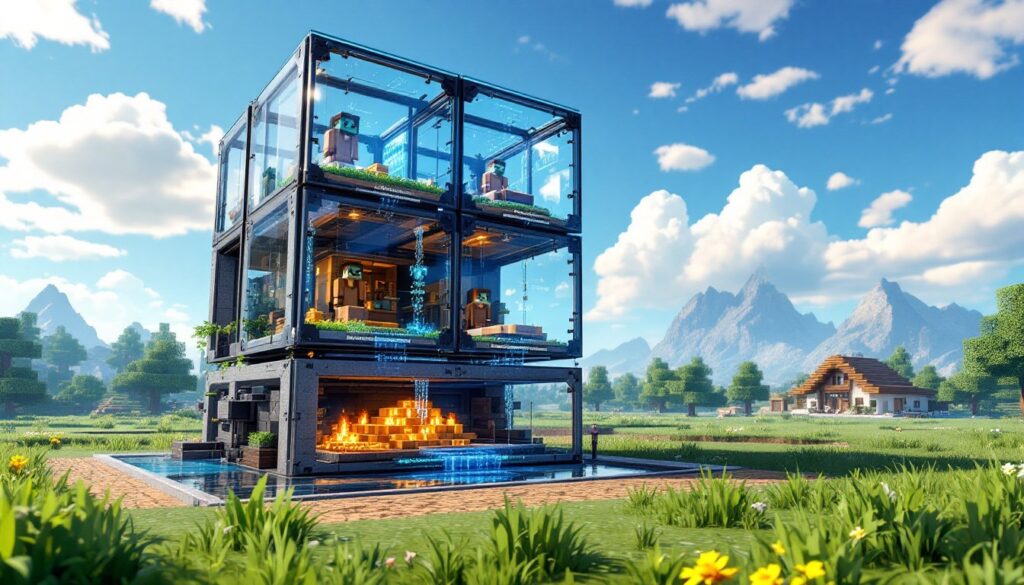
Build three small 1×1 glass pods stacked vertically or arranged in a row. Each pod gets one villager, one bed they can see, and a composter within reach. Villagers need line-of-sight to their bed at night and the workstation during the day to register as ‘linked.’
Directly below or beside the pods, place the zombie chamber. A standard setup uses:
- A glass-walled 1×1 cell holding a zombie (name-tag it with ‘Johnny’ if using a vindicator instead, though zombies are simpler)
- Glass between the zombie and villagers so they panic but stay safe
- A roof to block sunlight burn on the zombie
A solid walkthrough of similar contraption logic lives in the guide hub at game guides and walkthroughs, useful for cross-referencing layouts. Once villagers start shaking and sweating green particles, the trigger is working.
Creating the Collection and Kill Chamber
Directly under the village center, leave a hollow 16×16 area with a solid floor exactly 3 blocks below the villager pods. This is where golems spawn.
Add water streams along the floor pushing golems toward a single drop point. At the drop point, build the kill chamber:
- Drop golems through a 24-block fall to soften them up.
- Place a lava blade or 4 campfires at the bottom to finish them.
- Run hoppers beneath the kill spot into a double chest.
Campfires are the lazy-survival pick, they damage golems without burning the iron drops. Lava is faster but requires precise timing using a sign-and-water trick so ingots survive. Once it’s running, AFK within 64 blocks and watch the chest fill. The classic Minecraft Iron Farm: variant uses the same kill logic with a slightly larger footprint.
Best Iron Farm Designs for Different Versions and Playstyles
Not every world needs the same farm. Here’s a quick breakdown:
- Java 1.21+ (single-player): Ianxofour’s compact 3-villager design. ~340 ingots/hour, fits in a 9×9 footprint.
- Bedrock 1.21+: Silentwhisperer’s portable iron farm. Slightly lower rate (~250/hr) but works on Realms and most servers.
- Multi-village mega farm: Stack 3-4 separate villages 80+ blocks apart, AFK at the midpoint. Rates push past 1,000/hr but eats chunks of memory.
- Hardcore / early-game: A single-pod ‘starter’ farm using one villager swap. Lower output but builds in under 20 minutes.
Players who want to push further with modded versions can find well-tested community designs and quality-of-life tweaks over at the modding community hub, particularly for performance mods that help massive farms tick smoothly. For tutorials on configuring optimized servers or capturing AFK gameplay, the setup walkthroughs at streaming and gaming setup guides cover the technical side.
Villager housing aesthetics matter too, integrating farms into amazing minecraft houses or basement crawlspaces under awesome minecraft houses keeps the world looking clean instead of resembling a meat-processing plant.
Troubleshooting Common Iron Farm Problems
Most broken farms fall into the same handful of issues. Here’s the checklist:
- No golems spawning? Check the spawn platform, golems need a 2x4x2 clear space. Trapdoors, slabs, or stray torches block it.
- Villagers won’t panic? They need line-of-sight to the zombie. Glass works, solid blocks don’t.
- Golems spawning outside the chamber? Light up or block off every flat surface within 16 blocks of village center.
- Sheep in Minecraft pathing through? Funny but real, passive mobs like sheep in minecraft can occupy spawn spots. Fence off the perimeter.
- Farm slow after a while? Villagers have a cooldown after summoning a golem. Add more villagers (up to 10) to stagger triggers.
- Bedrock-specific issue: Simulation distance must be set to 4+ chunks, otherwise the village stops ticking when the player AFKs.
If the chest fills with rotten flesh instead of iron, something’s wrong with the kill chamber, the zombie escaped. Re-secure it before the villagers get cured into a different texture set.
Final Thoughts
An iron farm transforms Minecraft from a grind into a sandbox. Once it’s running, players stop rationing ingots and start building rail networks, beacon pyramids, and full-iron block megastructures because they can. Pick a design that fits the version and playstyle, follow the spacing rules, and the farm will outlast the world itself.