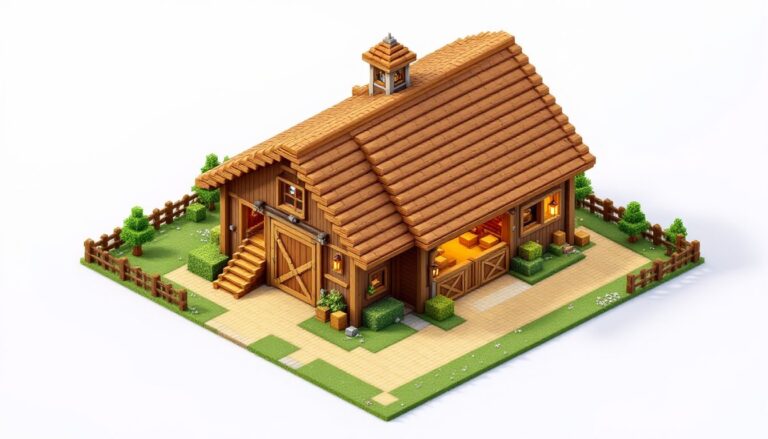
Farm design is where Minecraft survival transforms from chaotic scrambling into genuine strategy. Whether you’re grinding for food, experience, or rare drops, the layout you choose determines everything, how fast you harvest, how much you store, and whether your operation scales to industrial levels. In 2026, farm efficiency isn’t a luxury: it’s the backbone of any serious world. This guide walks you through five proven minecraft farm designs that balance functionality with aesthetics, covering everything from basic crop rows to complex redstone automation. Each approach addresses specific bottlenecks you’ll encounter, so you can build smarter, not just bigger.
Table of Contents
ToggleKey Takeaways
- Strategic minecraft farm designs with optimized water placement, lighting, and spacing directly impact harvest speed and overall productivity in your survival world.
- The classic row system hydrates farmland efficiently by placing water channels every 8 blocks, making it the most scalable foundation for crop farms.
- Mob grinder farms require dark spawning platforms at least 24 blocks away from your location, with water funneling mobs into vertical shafts for fully automated drops and experience collection.
- Animal farm pens should maintain 1-2 blocks per animal with secure fencing and adjacent storage to optimize breeding rates and feeding efficiency across different species.
- Redstone automation multiplies farm output exponentially by using observers, pistons, and dispensers to plant, harvest, and sort crops without manual intervention.
- Start with simple farm layouts and gradually layer complexity—mastering one automated crop type before scaling prevents lag and teaches essential redstone mechanics.
Why Farm Design Matters in Minecraft
Your farm layout directly impacts productivity in ways that aren’t always obvious. A poorly designed farm wastes space, forces constant trips back and forth, and makes harvesting a tedious grind. Good design optimizes water placement for hydration, arranges crops for efficient pathing, and builds in automation from the start to save you hours later.
Consider how lighting interacts with mob spawn rates. If your mob grinder doesn’t control light properly, hostile mobs won’t spawn predictably, tanking your experience and drop rates. Similarly, spacing in animal farms determines breeding speed and feeding efficiency. Even crop farms benefit from thoughtful layout, water channels hidden under trapdoors keep your fields clean while hydrating soil in a 4-block radius.
The difference between “functional” and “optimized” often comes down to vertical space usage, item flow patterns, and whether you’ve planned for expansion. A farm that takes 10 minutes to harvest can be redesigned to take 3 if you understand the mechanics driving each component.
Crop Farm Layout: The Classic Row System
The row system remains the gold standard for crop farms because it’s intuitive, space-efficient, and scales beautifully. Picture straight rows of farmland with water channels running perpendicular, this layout hydrates a 4-block radius on each side, meaning you need one water channel for every eight blocks of farmland width.
Start with farmland preparation: till your ground with a hoe, then dig alternating water channels. For a 16-block-wide field, you’ll need channels every 8 blocks. Fill these with water, and your soil is automatically hydrated as long as water is adjacent. Keep rows 1 block tall (no terracing yet) to maximize planting efficiency and visibility.
Make harvesting faster by leaving walking paths between major sections. Many players hide water under trapdoors or use waterlogged blocks to keep the field visually clean. For lighting, place glowstone or jack-o’-lanterns beneath the farmland layer, hidden from view. This prevents mobs from spawning on your crops while keeping the farm naturally lit.
If you’re just starting out, the how to build a sugar cane farm in minecraft guide covers similar principles that apply to any hydration-based crop. Scale your field based on what you plan to harvest, a wheat farm for breeding can be smaller than a carrot operation feeding an entire group.
Mob Grinder Farm: Automating Experience and Drops
A mob grinder is where automation truly pays off. Instead of hunting mobs at night, you create a controlled dark space where they spawn, funnel into a collection point, and drop their loot and experience automatically. The payoff is massive, players report gathering multiple stacks of drops and leveling up in minutes instead of hours.
The core mechanics are straightforward: hostile mobs need dark conditions (light level 0) and spawning platforms at least 24 blocks away from your location. Water channels funnel them downward, then drop damage or suffocation finishes the job. Hoppers below collect items directly into storage, and you collect orbs by standing nearby.
Building Your First Mob Grinder
Start with a 16×16 dark spawning platform elevated about 30 blocks above ground. Use full blocks, no trapdoors or slabs, so mobs have maximum surface area to spawn on. Leave a 1-block gap in the center: mobs walk toward it and fall into a water stream. The water feeds into a vertical shaft (at least 24 blocks drop) that deals damage or uses suffocation to kill mobs.
For simplicity, dig a 2×2 shaft with solid walls. Feed water from the platform into the shaft’s top, creating a current that pushes mobs downward. At the bottom, add a collection chamber: place hoppers facing into a double chest or storage system. Stand 8-12 blocks away to collect experience without triggering spawning limits.
If you want experience without manual killing, use suffocation damage. Stack mobs in a 1-block-tall area using soul sand or magma blocks, they take damage over time without killing each other. Alternatively, best minecraft xp farms are worth exploring if you want to optimize specifically for enchanting materials and leveling speed. Many players swear by designs that let you one-shot mobs for maximum experience gain.
Test your spawning platform by standing near it at night. If no mobs appear, the light level is too high, add more blocks overhead or use lower-light sources like amethyst. If mobs spawn but don’t funnel toward the drop, adjust water placement to create a stronger current.
Animal Farm Design: Breeding and Containment Best Practices
Animal farms differ fundamentally from mob grinders because you’re managing breeding rates, feed efficiency, and space constraints. Overcrowding slows breeding: too much space wastes resources. The sweet spot is about 1-2 blocks per animal with easy access to feed and a clear separation point for harvesting.
Build pens with secure fencing, use full fences, not just fence gates, as some hostile mobs can jump short gaps. Separate species to prevent accidental cross-breeding or resource conflicts. A wheat pen for cows and sheep might occupy one corner, while a carrot pen for pigs takes another. Keep pens adjacent to storage areas so you can dump feed quickly.
Breeding acceleration depends on feed availability. Cows need wheat, sheep need wheat, pigs need carrots, and chickens need seeds. If you’re serious about scaling, use minecraft iron farm mechanics as inspiration, the same automated feeding systems that work for iron golem farms can be adapted for animal breeding using dispensers and hoppers.
Leave doors and gates accessible without jumping. Your future self will thank you when you’re restocking 200 animals and don’t want to place temporary blocks. Light up pens to prevent mobs from spawning inside, use fences with lanterns or skulls for aesthetics while maintaining safety.
Advanced Automated Farms: Using Redstone and Pistons
Once you understand basic farms, redstone automation multiplies your output exponentially. Minecraft automatic farms use observers, pistons, dispensers, and water systems to plant, grow, and harvest crops without touching a single block manually. The complexity is worth it when you’re managing multiple crop types simultaneously.
A basic automatic wheat farm uses pistons pushing water through farmland, breaking crops and flushing them toward hoppers. Observers detect when wheat reaches maturity (by watching a block state change), triggering a clock circuit that powers the pistons. Items flow into hoppers, then into storage.
Advanced designs layer multiple systems. Terraced farms stack crops vertically, each level with its own water system and harvest mechanism. You can also integrate minecraft automatic farms with sorting systems that separate seeds from crops, feeding seeds back to a dispenser for automatic replanting.
Redstone complexity scales based on your ambition. A simple design uses a repeater clock and a single observer, easy to build, minimal lag. Complex designs chain multiple farms together, using item filters and sorting systems to manage different crop types simultaneously. Resources from gamesradar’s comprehensive guides and game rant walkthroughs often detail circuit designs worth learning from.
Start with one automated crop type before scaling. Wheat is forgiving, it grows fast and doesn’t require complex circuitry. Once that works reliably, add carrots, then potatoes, then specialty crops. Each addition teaches you more about timing, item flow, and troubleshooting lag issues.
Conclusion
Minecraft farm designs span from simple rows to intricate automated systems, each suited to different goals and playstyles. Start with the basics, a clean crop layout, a basic mob grinder, or a small animal pen, then layer complexity as you understand the mechanics. The minecraft farm designs and layouts guide offers additional reference points for visual inspiration and layout variations. Your farm becomes more than just a resource machine: it’s the foundation of everything else you build. Plan wisely, and harvest generously.