Survival in Minecraft eventually comes down to one question: how does a player keep up with their own ambitions? Diamond gear, enchanting tables, beacon pyramids, mega-bases, redstone contraptions, none of it scales without a steady pipeline of resources. That’s where farms come in. As of the 1.21 Tricky Trials updates rolling into 2026, the best farms for Minecraft aren’t just convenient, they’re the difference between thriving and grinding. Here are seven must-build designs that turn any survival world into a self-sustaining empire, plus the mistakes that quietly tank efficiency.
Table of Contents
ToggleKey Takeaways
- Farms for Minecraft are essential infrastructure that transform survival gameplay from manual grinding into automated, AFK-friendly resource production systems.
- Early-game players should prioritize building wood, wool, and sugar cane farms first, as these three foundational designs enable all other advanced systems.
- Mob farms and food farms are critical for XP, enchanting, and sustainability—with enderman farms in the End dimension offering the fastest path to maxed-out gear at 80+ levels per hour.
- Late-game farms like raid farms and gold farms in the Nether unlock economy-breaking resources, while villager trading halls remain the most powerful system for emerald generation and specialized book hunting.
- Common farm-building mistakes such as ignoring mob caps, using wrong Y-levels, and skipping chunk loaders can reduce efficiency by 60–80%—lighting caves and careful placement are critical.
- Properly designed farms can balance functionality with aesthetics, allowing players to create efficient resource pipelines that enhance their base design rather than detract from it.
Why Farms Are the Backbone of Every Minecraft Survival World
Every long-running survival world hits the same wall: the player wants to build, enchant, or trade at scale, but they’re still punching trees and chasing zombies for rotten flesh. Farms solve that.
A well-designed farm turns a finite, manual chore into an infinite, AFK-friendly supply line. Need stacks of XP for Mending? Build a mob farm. Tired of starving on Hardcore? Automate wheat and potatoes. Want netherite tools fully enchanted before the End? It all traces back to farm output.
The modern meta also rewards farms because villager trading, raid drops, and bartering with piglins all benefit from bulk resources. In short, farms aren’t optional, they’re infrastructure.
Essential Resource Farms Every Player Should Build First
Before chasing endgame contraptions, players should lock down the basics. These three early-game farms pay for themselves within a Minecraft day or two and need almost no redstone knowledge.
- Wood farm: A simple sapling-and-bonemeal setup with spruce or oak. Fuel, scaffolding, building blocks, all sorted.
- Wool farm: Built around a few sheep in Minecraft pens with auto-shearing dispensers on a redstone clock. Sheep regrow wool by eating grass, making them the cheapest renewable textile in the game.
- Sugar cane farm: Critical for paper (enchanting), books, and rockets. A piston-and-observer column setup harvests automatically the moment cane grows to three blocks. Players who want the optimized layout can follow this 2026 sugar cane guide for max throughput.
These three feed almost every other system that comes later.
Automatic Crop and Food Farms for Endless Supplies
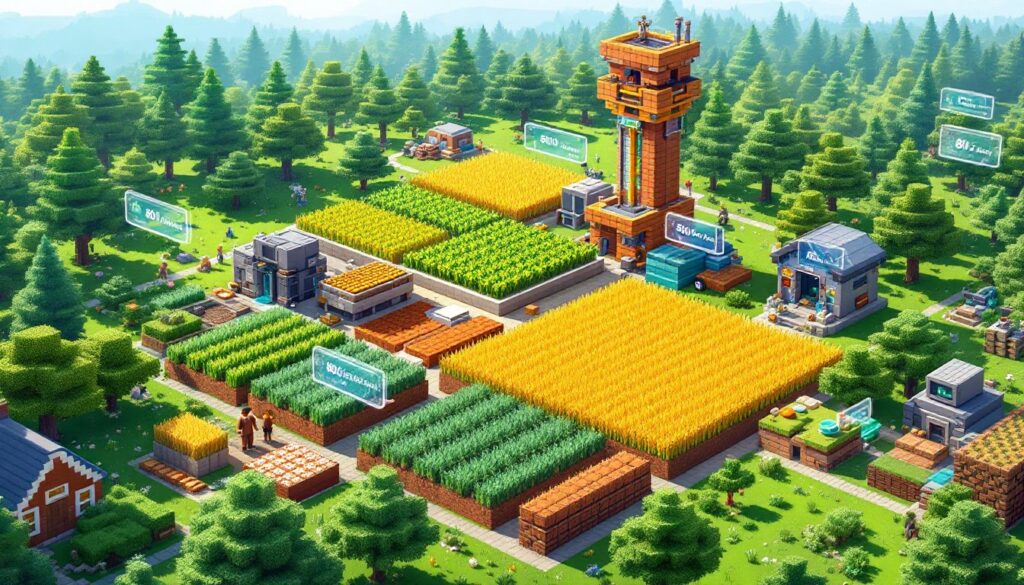
Food is the silent bottleneck. A villager-powered crop farm fixes that permanently. The classic design uses a farmer villager locked in a 9×9 plot, throwing wheat, carrots, potatoes, or beetroots into hoppers below.
- Throughput: A single farmer villager produces roughly 1,800–2,400 crops per hour.
- Best crop: Potatoes for hunger saturation, carrots for golden carrot crafting.
- Bonus: Pair with a chicken cooker for endless cooked chicken without lifting a finger.
For a broader rundown of crop, bamboo, and bee builds, a solid farm-ideas roundup covers compact designs that fit even a starter base.
Mob Farms for XP, Gunpowder, and Rare Drops
Once food and wood are handled, mob farms become the next priority. They feed enchanting, brewing, and TNT-based projects.
- General mob farm (dark room spawner): Built at Y=-59 or floating at sky-limit to suppress other spawns. Drops bones, string, gunpowder, rotten flesh, and arrows. Expect ~400–600 mobs/hour on a properly lit overworld.
- Creeper-only farm: Uses cats on pressure plates to repel skeletons and zombies. Gunpowder rates hit 100+ per hour, enough for unlimited rockets and TNT.
- Enderman farm (End dimension): The gold standard for XP. A well-built End farm pushes 80+ levels per hour and is the fastest legitimate path to maxed gear.
Players chasing levels fast should compare designs in the top XP farm builds before committing to a layout, since enderman platforms vary wildly in efficiency.
For a comprehensive list of mob and resource farms organized by drop type, this farm catalog is one of the more thorough references available.
Advanced Farms for Late-Game Progression
Late-game farms shift from “keep me alive” to “break the economy.” These builds rely on villager mechanics, dimension-specific spawning, or chunk-loaders.
- Raid farm: Post-1.20 raid farms still output emeralds, totems of undying, and enchanted books in absurd quantities. Expect 1–2 totems per raid cycle.
- Gold farm (Nether): Built on a Nether roof platform, zombified piglins drop gold ingots, nuggets, and XP. Average rates: 80–100 gold blocks per hour.
- Bamboo + cactus farm: Renewable fuel and green dye, perfect feedstock for super-smelters.
Iron, Gold, and Villager-Based Farm Setups
Iron is the resource that scales every other build, hoppers, rails, anvils, buckets, and a proper Minecraft iron farm setup easily pulls 300–600 ingots per hour using three villagers and a zombie inside a transport minecart.
Villager trading halls remain the most overpowered system in the game. A librarian rerolling for Mending books costs maybe 20 emeralds once unlocked. Combine that with a fletcher (sticks for emeralds) and a farmer (crops for emeralds), and emerald scarcity disappears entirely. Players running modded setups via the Fabric modloader can layer in QoL mods like Roughly Enough Items to plan trading routes faster.
Common Farm-Building Mistakes and How to Avoid Them
Even experienced players bleed efficiency from preventable errors. The usual suspects:
- Ignoring mob caps. The overworld hostile cap is 70. Running a mob farm while caves nearby are unlit cuts rates by 60–80%. Light up or use slabs.
- Wrong Y-level. Iron farms need villagers and zombies within a 16-block sphere. Gold farms above the Nether roof must use bedrock-breaking with care, or use vanilla-legal portal-based designs.
- No chunk loading. On multiplayer, farms stop when no player is loading the chunk. A dedicated Minecraft server with permanent chunk loaders solves this cleanly.
- Over-engineering. A 4-chunk creeper farm isn’t better than a compact one, it just lags the server. Smaller is usually smarter.
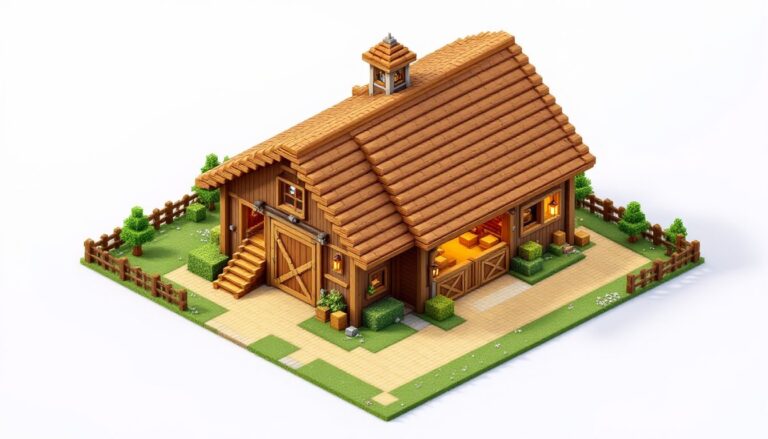
- Forgetting aesthetics. Functional farms can still look good. Wrapping them inside creative base designs or amazing Minecraft houses keeps a world worth showing off, not just grinding in.
For heavily modded worlds, mod conflicts also wreck farm timing, mods pulled from the largest mod hosting site should be tested before being added to a long-term world.